A family snack pouch should work after the first serving as well as at initial opening. Define how customers remove the product, how much remains and whether they are expected to reclose the pack. Test the complete sequence using the actual snack before approving a convenience feature.
Describe ordinary serving
State whether customers pour into a bowl, remove pieces by hand or use another defined method. Identify the actual product and intended sale quantity. A family namkeen mixture with several component sizes presents a different access task from a uniform small snack, even when both are sold in similarly styled pouches.
Record what the product owner expects the pack to do between servings. If reclosure is specified, identify the actual feature and its role. Fresh-Lock distinguishes closure types; the project record must identify the proposed system and position rather than a generic zipper label.
Define what a normal serving includes
Describe whether the customer pours directly, uses a hand or removes product with a utensil. Include the intended serving quantity only where the product owner has defined it. A family pack is a use proposition involving several actions, rather than a larger version of a single-serving photograph.
Observe the pack before the first serving, after that serving and in a naturally partly used state. These stages can reveal different access needs. A full pack may bring product close to the mouth, while a partly used pack requires the customer to reach further or change the pouch position.
Choose a representative product condition for the demonstration. A pack filled only with large attractive pieces may be easy to handle but omit smaller components or loose seasoning that matter during reclosure. Identify the actual mixture and its sampling basis.
An original task description could read: open at the intended feature, remove one ordinary serving into the normal bowl, clear the closing area under the proposed instructions, reclose and place the pouch in its intended storage position. The product owner should approve the handling and storage conditions before that sequence is used.
Review first opening and later access separately
Start with an unopened complete sample. Observe the opening cue, grip and resulting mouth. Then perform the normal serving task and reclose the pack if required. A first opening that looks neat can leave an awkward remaining edge or restricted access for larger pieces.
Use representative product, including normal fines and seasoning. Do not remove inconvenient pieces from the sample to make the pour cleaner. Keep the authorised handling conditions and product quantities in the record so later reviewers understand exactly what was observed.
Distinguish reach, alignment and engagement
Review three parts of reclosure separately. The customer must reach the feature, align its two sides where applicable and engage it along the intended length. A feature that closes when empty on a table may be harder to use with product in the mouth or with a partly collapsed pouch.
Record the action that succeeds or interrupts the task. Examples include moving a piece away from the feature, supporting the pouch with the other hand or checking a segment again. Such observations help identify a practical issue without inventing a consumer satisfaction score.
Use the same task wording for each candidate. If one demonstration includes coaching and another does not, record that difference. The comparison should distinguish what a user can infer from the pack from what they accomplish after an explanation.
An illustrative comparison might find comfortable first access in both candidates, but repeated realignment in one partly used sample. That finding supports another feature-and-geometry review. It does not establish that all customers will behave the same way or that either feature provides a particular storage duration.
Use a serving-state record
| State | Task | Observation |
|---|---|---|
| Unopened | Find and perform first opening | Cue, grip and remaining edge |
| First serving | Remove the ordinary amount | Access, pour direction and product contact |
| Reclosed | Align and operate the feature | Effort and clear completion feedback |
| Partly used | Repeat serving at a defined amount | Pack shape and handling |
| Near empty | Remove remaining product | Trapped pieces or difficult access |
This original record describes useful states without inventing a universal serving quantity or number of use cycles. Select the states that match the actual product proposition and document the trial scope.
Assess the closing region after serving
Inspect the feature area after the intended removal task and before reclosure. Record visible product, loose seasoning or other relevant material, with location. Keep the observation connected to the actual serving action: a residue found after pouring may have a different investigation path from material present immediately after filling.
Ask whether the proposed instructions require an ordinary, understandable action. A demonstration that succeeds only after careful rearrangement by a specialist may not support the intended family-use proposition. The answer might involve clearer access, a different feature arrangement or a revised use claim.
Separate the physical reclosure observation from product-condition evidence. A consumer can appear to engage a feature successfully while the actual storage proposition remains unassessed. Conversely, a product study cannot establish whether the customer can comfortably locate and operate the feature.
Record any instruction the demonstration relies on and include it in the artwork review where appropriate. If the pack needs an explanation to be used as intended, that explanation is part of the proposal. Keep the technical owner responsible for statements about storage conditions and product suitability.
Keep product condition in view
Observe whether the user has to shake, compress or rearrange the snack to remove it. Record any visible change in product condition under the defined task, using the product owner's assessment method where needed. Do not attribute damage to the opening without checking the incoming sample.
Ishida's snack resource separates product damage and pack presentation concerns. Apply the same discipline in a family-pack trial: a well-presented front and an easy zipper do not establish that the product-removal task is satisfactory.
Include retrieval in the use observation. A pouch that can be placed neatly once may require an awkward grip when taken out again beside other objects. Describe the intended arrangement and observe the ordinary sequence. This turns storage review into a realistic task while keeping claims about product preservation with the separate technical evidence.
Review partly used storage as a task
Observe how the pack rests and how the user holds it after product removal. Record whether the feature remains accessible as the pouch changes shape. If upright standing after opening is a product requirement, include it explicitly; do not assume it follows from the appearance of the full pack.
An illustrative result may show easy direct pouring but poor access to the last large pieces. The design decision could involve a different opening or a changed intended serving method. Review the customer task before asking for a stronger material or a different closure by default.
Include the place where a partly used pack rests
Observe the pouch in the actual intended storage arrangement. A shelf, cupboard or household container may constrain how the pack is placed and retrieved. Record the relevant dimensions and orientation from the use scenario rather than assigning a universal storage location to every family snack.
Watch whether the partly used pack is supported, folded, laid down or placed upright. Describe what the scenario requires and what the candidate does. An unsupported upright photograph is a limited observation unless the buyer has defined the surface and fill state.
The approval record can connect each task to its evidence: first opening, ordinary serving, reclosure, placement and retrieval. Give unresolved tasks a named owner. Purchasing then knows whether the feature is ready for a production proposal or whether a specific use question remains open.
For an illustrative final decision, a candidate may advance after comfortable access and reclosure were observed at the defined fill states, with storage evidence still subject to the product owner's programme. Keep that boundary visible in the approved proposition. The useful output is a supported customer task and an identified pack, rather than an unsupported promise that a family-size closure preserves snacks for a fixed period.
Family-pack zipper: a practical specification example
A snack brand is comparing an upright pouch with a flexible pack supplied from rollstock. Use the actual snack, since bulky pieces can settle or break differently from a powder or grain. Record the filled volume, the amount of clear closing space and the retail presentation. A resealable format also needs to be checked after part of the product has been consumed.
For this decision, start with the opening and repeated-use portion pattern. The useful output is a reclosure check after the pack is partly emptied. Put that output beside the relevant quotation, drawing or sample rather than leaving it in a separate email. This is an illustrative decision exercise, not a report of a completed customer trial.
Product references to make the discussion concrete
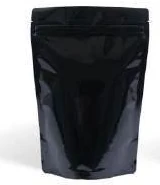
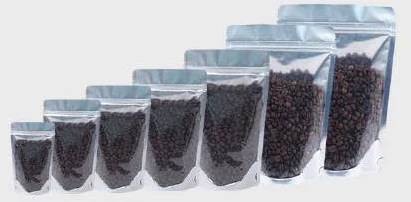
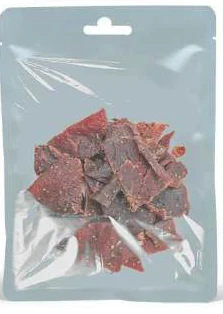
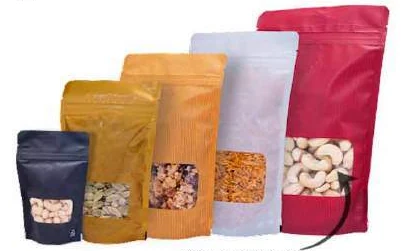
The catalogue includes window pouches and transparent stand-up pouches. These examples show different physical constructions; they are not interchangeable specifications. A window reveals part of the product while retaining an opaque area for artwork. Define its shape and location on the dieline, then check it at the intended fill level. An empty mockup can make a window appear better positioned than it is after the product settles.
| Format reference | Material or construction to clarify | Details to include in the brief |
|---|---|---|
| Window pouches | A transparent window combined with paper-look or opaque flexible panels; confirm the full structure and product requirements. | Window width, height and location; product visibility at full and low fill. |
| Transparent stand-up pouches | Transparent flexible film or laminate; optical clarity does not identify its barrier properties or complete composition. | Required clear viewing area; print coverage and opaque backing needs. |
Use the reference pictures to identify the base, side panels, window or opening that you mean. A picture cannot supply the missing dimensions or material layers. If a photograph shows a finish or closure you do not want, state that difference explicitly; otherwise a visual reference can introduce an unintended requirement.
Complete the record before requesting the next sample
- Attach a reclosure check after the pack is partly emptied. Identify the product or SKU and the date of the observation.
- Record the opening and repeated-use portion pattern. Keep confirmed information separate from proposed values and questions for the supplier.
- Add the actual fill weight or volume, the dimension convention, material proposal and intended closure. Include the number of designs and quantity per design when requesting a quotation.
- State which question the next drawing, sample or quotation must resolve. A change of size, closure or material should remain visible alongside the earlier reference.
This record makes the next conversation specific. It lets the design, purchasing and packing teams work from the same proposed item and shows which decision still needs evidence. Review the related product pages for format details, or prepare a custom packaging brief with the unresolved requirements.
Approve the actual use proposition
Have the product and brand owners decide whether the observed serving sequence matches the intended proposition. Keep material compatibility, closure performance and shelf-life evidence under appropriate separate technical review. Do not turn a successful short use observation into a storage-duration claim.
Send Navkar Poly Print the serving-state record, actual snack brief and selected feature requirement. Request a complete sample that can be reviewed through ordinary repeated use before final artwork and construction are released.
Sources and scope.
These references support the technical discussion. Product photographs illustrate formats; the material, dimensions and suitability of the proposed pack are confirmed for each project.
- Fresh-Lock flexible packaging closure applications
Differentiates press-to-close zippers and slider closure systems; not a performance claim for an unspecified pouch.
- Ishida snack food packaging applications
Equipment manufacturer treats pack weight, damage and pack presentation as separate snack-line concerns.
Let’s discuss your product.
Share your contents, dimensions, filling method, quantity and delivery destination. We’ll work through the proposed packaging specification with you.
Create a packaging brief