Specify a dori eyelet pouch by separating presentation, the intended carrying task and any product-contact requirement. The cord and eyelets are visible features, but the buyer still needs a drawing, a contents brief and clear acceptance criteria for the complete pack.
State what the pouch holds
Describe whether the pouch contains already packed products, a gift assortment or a product requiring direct-contact assessment. Give the contents arrangement and filled mass, including inserts or other components. Do not assume a decorative carrying feature establishes product protection, barrier performance or an approved food-contact application.
Keep the presentation brief concrete: shelf, counter, event handover or another defined use. Identify the intended user and normal handling sequence. A pouch held briefly for a photograph is not evidence of carrying performance through the intended journey.
Put cord and eyelets on the construction drawing
Record cord route, eyelet locations, intended opening and surrounding construction. Ask the converter to propose and confirm feasible details for technical review. The buyer should not insert guessed eyelet spacing or a load rating based on a different bag.
Manufacturer names alone can be ambiguous. SEE provides a three-side-seal format reference, while Craftz uses a four-side-seal-with-gusset description. Use your own construction drawing rather than assuming a product name defines every feature.

Approve the filled presentation
Review content fit, opening access, cord behaviour and panel appearance using an identified prototype. Let competent reviewers define carrying and construction evaluations where required. Keep subjective appearance comments separate from technical acceptance.
Trace the complete handover sequence
Write the use sequence as actions: assemble the assortment, insert it, close the presentation pouch, place it in the shipping carton, remove it and hand it over. Mark when the cord is actually used and when somebody supports the pouch body. This gives the reviewer a defined task instead of the vague instruction to make the gift bag strong. Ask the product owner to identify foreseeable handling beyond this sequence. A technical evaluator can then decide what evidence is appropriate and which circumstances the approved construction covers.
List the inner packs individually. A rigid carton corner, a smooth wrapped item and a loose presentation card create different contact points inside the outer pouch. Record the location of any protrusion and the orientation used during packing. If a decorative element could touch the product, route that contact question to the appropriate product specialist. An individually packed item can simplify the contents brief, but its presence does not establish that every outer material or added component is acceptable for the proposed use.
Separate cord closure, carrying and decoration
Give the cord a stated function. It may gather the mouth, serve as a carrying feature, secure a tag or provide visual detail. A single cord may have several jobs, which should appear as separate requirements. For each job, describe what an observer would need to see or measure. For example, an appearance reviewer may require a particular bow orientation, while a technical reviewer needs construction identity and a defined handling assessment. Avoid combining both decisions in one unqualified signature labelled approved sample.
Create a component list beside the drawing: pouch body, cord, eyelets, tag and any insert. Record who supplies and assembles each component. This matters when a buyer obtains the cord separately or changes an accessory after the pouch sample was accepted. A supplier's pouch price may exclude assembly, accessory procurement or gift packing. State those responsibilities explicitly so the finished presentation can be reproduced and its commercial scope understood. The contents and accessory register should travel with the sample rather than remaining in a separate design conversation.
Review access with the actual assortment
Ask the packing team to demonstrate insertion and closing under its authorised procedure. Observe whether a card catches at the opening, whether the contents need an orientation change and whether the cord obstructs access. Record the sequence before proposing a size change. A different packing order may resolve an access problem, whereas a larger outer dimension may leave the card free to move. The decision should identify which part of the task needs improvement and give the revised candidate its own reference.
Define the observation state before comparing prototypes. Use the same assortment and describe whether the mouth is open, gathered or ready for handover. GS1's package measurement standard distinguishes repeatable measurement conventions from merchandising orientation. Apply that distinction carefully: a catalogue dimension, a filled presentation photograph and a carrying assessment answer different questions. Record the state alongside each observation so a later reviewer can reconstruct what was actually accepted.
Build an assortment change decision
Consider an illustrative change from two boxed items and a card to two boxed items, a small wrapped item and the same card. Start with the component register. The new item changes occupied space and filled mass, but may also move an existing box corner towards an eyelet area. Update the arrangement drawing and use sequence before asking whether the original outer pouch can remain. Compare the filled candidate with the original arrangement under the agreed review plan. A shared artwork file does not make the arrangements equivalent.
The outcome can be a common outer pouch with two authorised packing maps, separate pouch versions or a request for further evidence. Record why the choice was made. If one version needs an insert, include the insert in the bill of materials, quotation and assembly instructions. Mark any decision that applies only to appearance. Keep unresolved carrying or contact questions assigned to their reviewers rather than allowing them to disappear when the brand team accepts the photograph.
Make the record usable by the packing team
Issue a one-page packing reference containing assortment code, component images, orientation, insertion order and the accepted finished view. Link it to the construction drawing and sample identity. Include a route for reporting missing accessories or substitutions before packing continues. The goal is to make the approved arrangement repeatable without requiring staff to interpret an old email or imitate a carefully staged marketing picture.
During review, ask a person who did not assemble the prototype to follow the reference. Treat questions about orientation, card position or closing sequence as document findings. Correct the instruction or return the unresolved construction question to its owner. This document exercise does not prove carrying performance, but it can reveal whether the team has supplied enough information to reproduce the intended gift. Retain the corrected instruction with the release record and identify who owns future assortment changes.
Illustrative gift brief
Imagine a gift pouch containing three individually packed products and a card. Create an arrangement drawing showing their order and orientation. Record the combined filled mass and identify whether the card can move behind the front panel. Use the prototype to review presentation after ordinary intended handling, rather than judging only the neatly staged first arrangement. If the assortment changes to four products, reopen both fit and carrying questions even when the outer artwork is unchanged. The exercise produces a contents-specific brief instead of an unsupported promise that one gift pouch fits an entire catalogue.
If accessories are delivered separately, record their receiving checks and storage identity alongside the packing reference. An assembler should be able to match the approved cord, eyelet and tag versions to the assortment before work begins. Escalate an unidentified replacement through the agreed component review rather than treating it as a cosmetic choice.
A working record for this decision
Use this original worksheet with your product and supplier team. Give each row a named owner and evidence reference; a blank answer remains an open decision.
| Record | What to enter and why |
|---|---|
| Contents arrangement | List individual items, inner packs, inserts and filled mass with an arrangement sketch. |
| Presentation use | Describe counter, shelf or handover setting and the intended handling journey. |
| Cord and eyelets | Mark proposed route, locations and opening details for converter confirmation. |
| Construction identity | Attach pouch drawing, material proposal and relevant component references. |
| Acceptance record | Separate appearance, access, fit and carrying requirements with responsible reviewers. |
Drawstring pack: a practical specification example
A special retail profile must still provide a usable cavity and a practical opening. A hanging header, die-cut outline or carrying feature occupies material that cannot automatically be counted as product space. Start with a drawing of the actual product envelope, then place the feature and the artwork. Compare the filled pack on the intended fixture rather than judging only the flat silhouette.
For this decision, start with the product envelope and closing allowance. The useful output is the usable height below the drawstring area. Put that output beside the relevant quotation, drawing or sample rather than leaving it in a separate email. This is an illustrative decision exercise, not a report of a completed customer trial.
Product references to make the discussion concrete
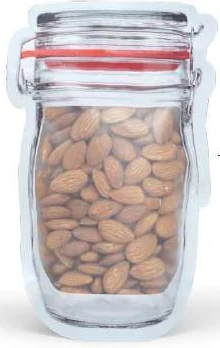
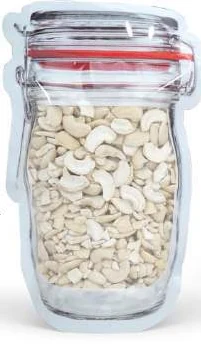
The catalogue includes jar-shaped zipper pouches and hanging display pouches. These examples show different physical constructions; they are not interchangeable specifications. A contoured outline gives the pouch a jar-like silhouette while retaining a flexible pack construction. The narrow shoulder and top opening affect filling and access. Review the usable cavity, zipper length and artwork boundaries on a dimensioned drawing before committing to the shape.
| Format reference | Material or construction to clarify | Details to include in the brief |
|---|---|---|
| Jar-shaped zipper pouches | Clear or frosted flexible pouch construction with a zipper; the jar shape is a profile, not a rigid container. | Usable cavity and narrowest opening; die-cut outline and corner radii. |
| Hanging display pouches | Clear or opaque flexible pouch construction with a punched hanging feature; final material and reinforcement are reviewed for the fill. | Retail hook and hole dimensions; filled weight and hanging orientation. |
Use the reference pictures to identify the base, side panels, window or opening that you mean. A picture cannot supply the missing dimensions or material layers. If a photograph shows a finish or closure you do not want, state that difference explicitly; otherwise a visual reference can introduce an unintended requirement.
Complete the record before requesting the next sample
- Attach the usable height below the drawstring area. Identify the product or SKU and the date of the observation.
- Record the product envelope and closing allowance. Keep confirmed information separate from proposed values and questions for the supplier.
- Add the actual fill weight or volume, the dimension convention, material proposal and intended closure. Include the number of designs and quantity per design when requesting a quotation.
- State which question the next drawing, sample or quotation must resolve. A change of size, closure or material should remain visible alongside the earlier reference.
This record makes the next conversation specific. It lets the design, purchasing and packing teams work from the same proposed item and shows which decision still needs evidence. Review the related product pages for format details, or prepare a custom packaging brief with the unresolved requirements.
Put the decision into practice
1. Describe the contents. Provide a real assortment layout and filled mass before selecting the outer presentation.
2. Agree the drawing. Resolve cord, eyelet and opening details with the converter rather than relying on a sample photograph.
3. Review filled prototypes. Observe presentation and access using the intended contents and agreed handling sequence.
4. Release the assortment scope. State which contents arrangement and construction the approval covers and how changes are reviewed.
Send Navkar Poly Print your contents arrangement, filled mass and presentation sketch when requesting a dori eyelet pouch review.
Sources and scope.
These references support the technical discussion. Product photographs illustrate formats; the material, dimensions and suitability of the proposed pack are confirmed for each project.
- SEE: Three Side Seal Pouches
Manufacturer format reference for a three-side sealed pouch; supplied features and suitability are not transferred to Navkar.
- Craftz: four-side seal pouches with gusset
Manufacturer format example demonstrates why drawings are needed to distinguish seal and gusset constructions.
- GS1 Package and Product Measurement Standard
Defines measurement state and distinguishes flexible-pack measurement from merchandising orientation; data conventions are not fabrication tolerances or display load ratings. Official indexed text retrieved; direct open returned internal error.
Let’s discuss your product.
Share your contents, dimensions, filling method, quantity and delivery destination. We’ll work through the proposed packaging specification with you.
Create a packaging brief