A dangler pouch needs a display brief that includes the actual fixture, filled pack and shopper view. Begin with where the pack hangs and how it is removed; the printed front panel is only one part of that retail interaction.
Identify the fixture before the hole
Obtain a drawing or dimensions of the intended hook, rail or other display fixture. Record available vertical space, adjacent products and how many packs are expected in the display. Ask the retailer or distributor to confirm requirements rather than designing from an assumed standard hook.
Keep the intended hanging feature separate from any product-containing compartment. The converter and technical reviewer should assess how the feature fits the construction, including its relationship to seals and opening access. Do not prescribe a hole location that has not been reviewed.
Review the filled viewing angle
Observe the pack hanging with representative contents. Record whether the front faces the shopper, the body rotates or key information is obscured by the fixture. Check viewing at the actual display position; a flat artwork view cannot show all folds and tilt.
SEE's three-side-seal sheet is one format reference. Craftz demonstrates another named seal-and-gusset construction. Treat these as terminology context and specify the actual dangler drawing with the converter.
Separate display acceptance from pack performance
Ask the appropriate team to define hanging and handling evaluation for the intended load and fixture. A prototype looking straight on the hook does not establish a carrying or display-life rating. Record what each sample can demonstrate and what remains open.
Describe how the display is replenished
A dangler proposal should explain the whole fixture arrangement. Draw the hook or strip, the number of positions, neighbouring merchandise and the direction from which staff add packs. Record whether the channel expects individual packs to slide along a hook or attach separately to a strip. Those are different engagement tasks. Obtain actual fixture information from the channel owner; a photograph without a scale may show the appearance while concealing the geometry that determines access.
Make one fixture sheet for each materially different arrangement. Include the fixture reference, location, intended viewing direction and the pack configuration used during review. If the retailer supplies dimensions, preserve the original document and record any later interpretation separately. This makes it possible to distinguish a mistaken transcription from a design issue. Ask who can accept a fixture change, especially when the store uses an alternative hook after the design has already been sampled.
Observe orientation before changing the graphics
Review the filled body after it has settled in the intended display. Note whether the front remains facing the shopper, whether the hanging point creates tilt and whether adjacent packs support or cover it. Use labelled photographs from the agreed viewing locations. A single close-up can make text look readable even when the planned display places it behind another item. Record the viewing context so reviewers can distinguish a panel-placement problem from a camera-position effect.
Use observation language that identifies the issue: variant name obscured by the fixture, lower panel hidden by the pack in front, or opening access restricted during removal. Avoid turning these notes into claims about shopper preference. A display review can help find a visible obstruction; it cannot establish additional sales without a suitable commercial study. Assign each finding to the person who controls its cause, such as channel arrangement, construction or artwork.
Keep merchandising dimensions separate
GS1's measurement guidance explains that flexible-pack measurement conventions may differ from the merchandising orientation. Keep the channel's display envelope separate from the package master-data dimensions. This prevents a team from assuming that the recorded pack height is automatically the clearance needed on the hook. Both records can be valid while serving different purposes, provided their states and reference points are clearly stated.
For the display envelope, sketch the pack as hung, including the part engaged by the fixture. Identify which dimensions come from the fixture owner and which remain proposals for converter review. Do not import a database tolerance as an allowed manufacturing variation or a hanging-load criterion. Technical acceptance needs its own agreed method and conditions. Link those decisions to the sample identity so a later artwork refresh does not accidentally refer to a different construction.
Run a controlled fixture comparison
For an illustrative review, label the single-hook arrangement H and the merchandising-strip arrangement S. Use the same identified filled pack when the technical owner considers that comparison appropriate. For each arrangement, record initial orientation, visibility of named information, access during authorised removal and the arrangement afterwards. Keep the review sequence and photograph positions consistent. If the fixture requires a different hanging feature, stop treating the two samples as one construction and assign separate candidate references.
Record the result as an observation with its limits. For example, H may leave the variant name visible in the planned arrangement while S covers it with the attachment point. The next action is to investigate panel placement or fixture arrangement, not to declare the entire pouch unsuitable. If the feature location changes, reopen its relationship to the product compartment, seal and opening. Technical reviewers decide whether additional construction evidence is needed before that alternative can progress.
Plan the reduced-stock condition
A full display may hold packs in a position that changes as items are removed. Ask the channel owner to define representative reduced-stock arrangements and review those deliberately. Do not improvise a hanging duration or a load sequence from another product. The review should follow an agreed procedure suitable for the intended pack and fixture. Record any support provided by neighbouring packs because it may explain why the full display appears different from the final few units.
Include replenishment in the observation record. Ask whether staff can identify the variant and place it in the intended orientation using the available instructions. Record confusion between front and back or between two similar variants as a specific instruction or design finding. A useful outcome is an accepted arrangement drawing with clear variant positions and an identified construction, rather than a score that hides several different causes behind the word good.
Close findings by ownership
Maintain a short issue register with finding, evidence photograph, responsible owner, proposed change and closure evidence. The artwork owner can address hidden content; the channel owner can alter an arrangement; the converter can review feature feasibility. Some findings need more than one owner. State the agreed sequence so a graphics change does not precede a construction decision that will move the panel again.
When the display is accepted, name the fixture and pack arrangement covered. Preserve the accepted prototype and supporting records under the buyer's retention procedure. If a distributor later proposes a new strip or hook, retrieve the earlier record and compare the changed interface. This gives the team a focused starting point for another review and prevents a broad historical approval from being stretched across displays that were never examined.
Illustrative fixture comparison
Suppose the same product is proposed for a single hook and a strip display. Create one row for each fixture with dimensions, pack count and shopper approach. Hang the identified filled prototype under the agreed review conditions and record front visibility, access and removal observations. If one fixture requires a different feature location, give that proposal its own drawing revision. The result may support one common layout or separate display versions. Either outcome is clearer than asking the converter for a generic "retail hanging pouch" and discovering a mismatch after print approval.
A working record for this decision
Use this original worksheet with your product and supplier team. Give each row a named owner and evidence reference; a blank answer remains an open decision.
| Record | What to enter and why |
|---|---|
| Fixture reference | Attach hook or strip drawing and retailer requirements for the intended display. |
| Display arrangement | Record available space, planned pack count and neighbouring products. |
| Filled identity | Identify contents, filled mass and the prototype construction used for review. |
| Feature drawing | Mark hanging feature location and relationship to seals, opening and key artwork. |
| Observation criteria | Define shopper visibility, access, removal and technical review requirements before approving. |
Eyelet feature: a practical specification example
A special retail profile must still provide a usable cavity and a practical opening. A hanging header, die-cut outline or carrying feature occupies material that cannot automatically be counted as product space. Start with a drawing of the actual product envelope, then place the feature and the artwork. Compare the filled pack on the intended fixture rather than judging only the flat silhouette.
For this decision, start with the attachment position and intended load. The useful output is a drawing showing the feature outside the usable cavity. Put that output beside the relevant quotation, drawing or sample rather than leaving it in a separate email. This is an illustrative decision exercise, not a report of a completed customer trial.
Product references to make the discussion concrete
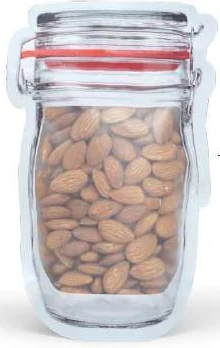
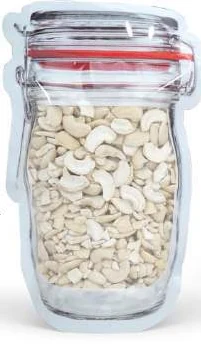
The catalogue includes jar-shaped zipper pouches and hanging display pouches. These examples show different physical constructions; they are not interchangeable specifications. A contoured outline gives the pouch a jar-like silhouette while retaining a flexible pack construction. The narrow shoulder and top opening affect filling and access. Review the usable cavity, zipper length and artwork boundaries on a dimensioned drawing before committing to the shape.
| Format reference | Material or construction to clarify | Details to include in the brief |
|---|---|---|
| Jar-shaped zipper pouches | Clear or frosted flexible pouch construction with a zipper; the jar shape is a profile, not a rigid container. | Usable cavity and narrowest opening; die-cut outline and corner radii. |
| Hanging display pouches | Clear or opaque flexible pouch construction with a punched hanging feature; final material and reinforcement are reviewed for the fill. | Retail hook and hole dimensions; filled weight and hanging orientation. |
Use the reference pictures to identify the base, side panels, window or opening that you mean. A picture cannot supply the missing dimensions or material layers. If a photograph shows a finish or closure you do not want, state that difference explicitly; otherwise a visual reference can introduce an unintended requirement.
Complete the record before requesting the next sample
- Attach a drawing showing the feature outside the usable cavity. Identify the product or SKU and the date of the observation.
- Record the attachment position and intended load. Keep confirmed information separate from proposed values and questions for the supplier.
- Add the actual fill weight or volume, the dimension convention, material proposal and intended closure. Include the number of designs and quantity per design when requesting a quotation.
- State which question the next drawing, sample or quotation must resolve. A change of size, closure or material should remain visible alongside the earlier reference.
This record makes the next conversation specific. It lets the design, purchasing and packing teams work from the same proposed item and shows which decision still needs evidence. Review the related product pages for format details, or prepare a custom packaging brief with the unresolved requirements.

Put the decision into practice
1. Collect fixture details. Ask the channel owner for real dimensions and display expectations before choosing the feature.
2. Create the layout. Coordinate hanging construction and artwork using one controlled drawing.
3. Review on the fixture. Observe representative filled packs and record orientation, visibility and access.
4. Release by display scope. State which fixtures and arrangement the decision covers and retain unresolved technical requirements.
Give Navkar Poly Print the fixture drawing and intended display arrangement when asking about a dangler pouch.
Sources and scope.
These references support the technical discussion. Product photographs illustrate formats; the material, dimensions and suitability of the proposed pack are confirmed for each project.
- SEE: Three Side Seal Pouches
Manufacturer format reference for a three-side sealed pouch; supplied features and suitability are not transferred to Navkar.
- Craftz: four-side seal pouches with gusset
Manufacturer format example demonstrates why drawings are needed to distinguish seal and gusset constructions.
- GS1 Package and Product Measurement Standard
Defines measurement state and distinguishes flexible-pack measurement from merchandising orientation; data conventions are not fabrication tolerances or display load ratings. Official indexed text retrieved; direct open returned internal error.
Let’s discuss your product.
Share your contents, dimensions, filling method, quantity and delivery destination. We’ll work through the proposed packaging specification with you.
Create a packaging brief