Accept dry fruit packaging evidence only for the product, construction and conditions it actually covers. A film data sheet, a complete-pack report and a storage study answer different questions. Use an evidence-scope ledger so procurement can see what is supported, what is transferable and what remains open.
Begin with the claim being proposed
Write the exact question the evidence must answer: material suitability, closure performance, product quality under defined storage or another stated requirement. Avoid broad labels such as “premium barrier” as the entire acceptance condition. A claim needs a scope that can be compared with a document.
Identify product form, processing state, formulation reference and quantity. The Almond Board's technical resource distinguishes processing-state behaviour. That makes accurate product identity necessary; it does not establish a shelf-life duration for an unspecified pouch.
Convert broad promises into assessable statements
Start with the exact statement being considered. Suitable for our dry fruit is too broad to assess without product, construction and conditions. A useful statement identifies the product form, proposed pack, intended storage or handling and the particular outcome to be supported.
Ask which decision the evidence needs to close. Material selection, complete-pack integrity, product quality and ordinary access involve different mechanisms. One document may contribute to several discussions, but its actual method and scope still limit its conclusion.
For an illustrative claim review, comfortable opening at a defined filled state can be assessed through an appropriate use observation. A proposed storage duration requires a product-specific evidence programme. A laminate-property sheet cannot replace that programme simply because it contains precise numbers.
Write the statement and evidence reference side by side before reviewing the supplier's documents. This prevents the team from collecting available data first and inventing a broader conclusion afterwards. Procurement can organise the record while the accountable product and technical owners decide whether the evidence supports the statement.
Separate the evidence layers
A material data sheet describes a specified material under stated methods and conditions. A complete-pack assessment concerns the assembled pouch and closure. A storage study concerns a defined product-and-pack combination over its actual assessment period and conditions. Keep those layers connected without treating them as interchangeable.
Ask for document title, issuer, date, sample identity, method and relevant conditions. Have the responsible technical reviewer assess whether the report is adequate and applicable. Procurement can organise the record, but it should not invent acceptance criteria or interpret unfamiliar test results beyond its authority.
Read the tested system and the measured outcome
Lin and colleagues studied almond lipid deterioration across specified natural, blanched and sliced forms and temperature-and-humidity combinations. They monitored peroxide, iodine and free-fatty-acid measures. The measures did not respond identically. The abstract therefore supports careful attention to product form, conditions and outcome; it does not qualify a retail pouch.
For each report, identify the specimen or system, preparation, method, conditions, measured outcome and stated conclusion. Where only an abstract or public scope is available, record that access limit. Do not claim to have reviewed a complete procedure or raw dataset that was not provided.
Check whether the proposed commercial product matches the tested one in the characteristics relevant to the claim. A whole almond result cannot automatically support roasted mixed nuts, and one complete construction cannot silently stand for a different closure or geometry.
Keep numerical precision in perspective. A carefully measured property can still answer the wrong question for the business decision. The useful review asks whether the method and system address the actual claim, not whether the report looks technical.
Use an evidence-scope ledger
| Evidence | Identity to confirm | Scope question |
|---|---|---|
| Material document | Exact structure and relevant revision | Does it describe the proposed material? |
| Component document | Actual closure or fitment | Does it cover the selected component? |
| Complete-pack record | Pouch drawing and closing process | Does it cover the assembled configuration? |
| Product study | Finished product and conditions | Does it support the proposed product claim? |
| Change decision | Old and new references | Has transfer of evidence been approved? |
This original ledger makes missing links visible. A document can be authentic and still address a different product, structure or condition from the current enquiry.
Make the storage question specific before collecting data
Ask the product owner to define the relevant quality outcomes and acceptance criteria. Record the product, quantity, construction and intended distribution and storage conditions. The trial plan should explain what is being assessed and how the observations will support the proposed conclusion.
Keep time, environment and sample identity connected to every result. A photograph taken at an unknown date or a sensory note without product identity is difficult to interpret. Record deviations rather than substituting the intended conditions for the actual ones.
Choose the evidence programme through the accountable technical team. This article's ledger is an organising tool, not a laboratory procedure or a shortcut to assigning shelf life. If accelerated conditions or predictive methods are proposed, their applicability and interpretation require relevant expertise and validation.
An illustrative brief may leave the final storage statement open while early physical samples resolve fit and access. This permits the project to progress in parallel without presenting a successful short demonstration as proof of a duration it was not designed to assess.
Build a storage-trial brief through the product owner
Ask the product and technical owners to define the study objective, relevant conditions, assessment methods and acceptance criteria. Record the actual proposed pack and process. Do not invent a duration or guarantee an outcome from a generic category page.
UC Davis's walnut guidance identifies handling and storage as quality factors. That supports including the actual route and conditions in the brief. It does not replace a study for a particular commercial walnut product or a mixed dry fruit formulation.
Test whether existing evidence still applies
Map a proposed change to the claim's relevant inputs. Product form, formulation, processing condition, pack construction, closure, geometry and storage route can affect different evidence layers. Record which changed and why a particular report is retained or renewed.
Avoid two extremes: assuming every change invalidates every report, or assuming a familiar brand and quantity preserve every previous conclusion. The accountable owner should make a reasoned scope judgement and record it in the ledger.
For an illustrative change, new artwork may leave a material property report relevant while altering an opening cue that needs another use review. A different closure can affect complete-pack evidence even when the film reference stays unchanged. Each decision should follow the mechanism involved.
Link the evidence judgement to the released product-and-pack combination. A report retained in a folder is not enough if purchasing cannot tell which current proposal it supports. The ledger should show the approved references and the remaining questions in a form a new reviewer can follow.
Review transfer after changes
If a product becomes roasted, coated, chopped or mixed, ask which evidence remains relevant. Do the same when the structure, zipper, final closing process or size changes. Record the technical owner's reason for accepting earlier evidence or requiring more work.
For an illustrative document mismatch, a supplier may provide material data for one structure while the quotation offers a revised structure. The next action is to reconcile identities and obtain the appropriate review. It is not enough that both documents use a similar commercial material description.
Give purchasing a conclusion it can use
Write a short conclusion that identifies the supported statement, evidence references and scope. Separate open gates from approved conclusions. Avoid a general technical-approved label that leaves the reader guessing whether it covers fit, material, closure, product quality or all of them.
Retain the actual report versions and responsible decisions in the controlled file. Record intended departmental business review separately from completed technical approval. No reviewer title or editorial panel should imply that testing or expert sign-off occurred when it has not.
When evidence is incomplete, specify the missing question and owner. This is more actionable than a generic request for more data. The supplier can then propose relevant material or samples while the product team coordinates its own programme.
At order release, match the conclusion to the current construction, drawing, product and route. If any relevant input changes later, reopen the affected ledger item. This keeps the business claim proportionate to evidence and prevents a limited result from growing into an unsupported promise through repeated quotation or artwork reuse.
Dry-fruit sample approval: a practical specification example
A dry-fruit range includes almonds, raisins and a gift assortment. Equal weights may occupy different volumes and present differently behind a window. Compare each product at its own intended fill rather than copying one size across the range. For a zipper pouch, review access and reclosure after repeated portions; for a gift pack, review how the filled pouch sits inside the outer presentation.
For this decision, start with the product, drawing and material proposal. The useful output is separate observations for appearance, access and construction. Put that output beside the relevant quotation, drawing or sample rather than leaving it in a separate email. This is an illustrative decision exercise, not a report of a completed customer trial.
Product references to make the discussion concrete
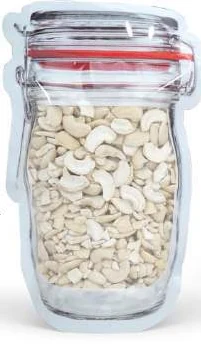
The catalogue includes jar-shaped zipper pouches and window pouches. These examples show different physical constructions; they are not interchangeable specifications. A contoured outline gives the pouch a jar-like silhouette while retaining a flexible pack construction. The narrow shoulder and top opening affect filling and access. Review the usable cavity, zipper length and artwork boundaries on a dimensioned drawing before committing to the shape.
| Format reference | Material or construction to clarify | Details to include in the brief |
|---|---|---|
| Jar-shaped zipper pouches | Clear or frosted flexible pouch construction with a zipper; the jar shape is a profile, not a rigid container. | Usable cavity and narrowest opening; die-cut outline and corner radii. |
| Window pouches | A transparent window combined with paper-look or opaque flexible panels; confirm the full structure and product requirements. | Window width, height and location; product visibility at full and low fill. |
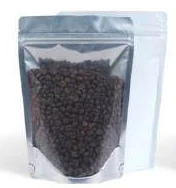
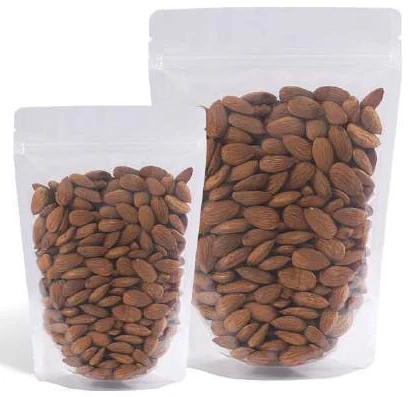
Use the reference pictures to identify the base, side panels, window or opening that you mean. A picture cannot supply the missing dimensions or material layers. If a photograph shows a finish or closure you do not want, state that difference explicitly; otherwise a visual reference can introduce an unintended requirement.
Complete the record before requesting the next sample
- Attach separate observations for appearance, access and construction. Identify the product or SKU and the date of the observation.
- Record the product, drawing and material proposal. Keep confirmed information separate from proposed values and questions for the supplier.
- Add the actual fill weight or volume, the dimension convention, material proposal and intended closure. Include the number of designs and quantity per design when requesting a quotation.
- State which question the next drawing, sample or quotation must resolve. A change of size, closure or material should remain visible alongside the earlier reference.
This record makes the next conversation specific. It lets the design, purchasing and packing teams work from the same proposed item and shows which decision still needs evidence. Review the related product pages for format details, or prepare a custom packaging brief with the unresolved requirements.
Release a bounded evidence statement
Record the supported claim, controlling documents, product and pack identities, conditions and approval owner. Keep pending items visible in the release dossier. Do not describe a pack as certified, compliant or shelf-life-proven unless the actual evidence and responsible review support that exact statement.
Send Navkar Poly Print the evidence-scope ledger and product-specific requirements. Ask the proposal to identify available documentation and remaining trial dependencies clearly, so commercial approval rests on a traceable application review rather than a collection of unrelated technical files.
Sources and scope.
These references support the technical discussion. Product photographs illustrate formats; the material, dimensions and suitability of the proposed pack are confirmed for each project.
- Almond Board of California: moisture migration and management
Almond behaviour depends on processing state and environment; no shelf-life duration inferred.
- UC Davis walnut quality and handling guidelines
Handling and storage are material parts of nut quality; no duration or packaging guarantee inferred.
- Lin and colleagues: almond lipid deterioration during storage
Primary abstract illustrates differing responses by product form, storage condition and measured quality indicator; no current retail shelf-life claim inferred.
Let’s discuss your product.
Share your contents, dimensions, filling method, quantity and delivery destination. We’ll work through the proposed packaging specification with you.
Create a packaging brief