Specify a dry fruit gift assortment from its inner product units outward. Each product needs an identified pack and approval; the gift box then needs a controlled count, arrangement and assembly check. A polished outer presentation cannot substitute for reviewing the packs that actually contain the food.
Create an inner-unit register
List each product reference, finished form, net quantity, pouch drawing and artwork. State whether an inner unit is also sold separately or exists only within the gift set. Have the responsible content reviewer confirm information requirements at both levels for the actual sales route.
Do not assume one product approval covers every dry fruit in the box. UC Davis's date factsheet and walnut guidance address different product considerations. The actual product and conditions must control each technical assessment.
Build the assortment from real inner applications
List the actual products, quantities and inner-pack references before choosing the decorative outer arrangement. A gift assortment can contain products with different physical forms, access needs and technical evidence. A shared presentation theme does not make those applications identical.
Give each inner unit a role: independent usable pack, counted portion or another approved proposition. The responsible owners should confirm information and identification requirements at each level. Avoid assuming that all necessary content can move to the gift box without a specific review.
Use representative filled units for the assembly work. Empty samples can create an attractive mock-up while concealing occupied volume, contact and access differences. Label any early empty mock-up as a layout aid so reviewers understand what it demonstrates.
For an illustrative four-product gift set, give whole nuts, a mixture, dates and raisins separate inner references even if two use a common drawing. The register then distinguishes product approval from component commonality. Procurement can request quantities accurately and identify which application changes when a seasonal substitution is proposed.
Approve each inner unit as a usable pack
Fill, close and open representative inner pouches. Review product access and any reclosure task. Identify the supplied condition and the final packing operation. A small decorative pouch may still need the same clarity of drawing, closure and product reference as a larger retail component.
Keep technical compatibility, complete closure and storage evidence under the appropriate product and quality owners. The gift context does not establish a storage duration. If a set combines different products, ask the responsible team how the complete assortment's approved conditions are defined.
Review the inner unit before hiding it in the box
Observe filling, closing, opening and ordinary product removal for each inner application. Where a reclosure belongs to the proposition, include the relevant partly used task. A decorative box can support presentation but cannot demonstrate that an inner pouch is useful after removal.
Check the actual product reference behind each unit. A whole-nut fit observation cannot automatically approve cut fruit in the same outside dimensions. Keep the evidence paired with the intended product and quantity.
An illustrative finding might retain one inner pouch for two assessed nut products while dates require further access work. Record that difference without delaying unrelated artwork organisation. The unresolved application should remain a specific gate rather than disappearing into an overall approval of the gift set.
Keep material and product suitability evidence with the relevant technical owners. The gift format does not establish storage duration or compatibility. Where different products share a common outer environment, have the responsible team identify any relevant combination questions rather than assuming separate inner approvals answer every assembly condition.

Use an assortment bill-of-pack
| Set position | Product and quantity | Inner-pack reference | Assembly check |
|---|---|---|---|
| Position A | Actual approved product | Drawing and artwork ID | Correct unit and orientation |
| Position B | Actual approved product | Drawing and artwork ID | Correct unit and orientation |
| Position C | Actual approved product | Drawing and artwork ID | Correct unit and orientation |
| Outer set | Set identity and count | Gift box and insert revision | Complete set confirmed |
The entries are illustrative positions, not a recommended assortment. This original bill-of-pack gives assembly staff a physical reference and creates a link between the selling set and its food-containing units.
Use the bill-of-pack as an assembly instruction
Record each inner reference, count, orientation and intended position, followed by outer components and any actual dividers or supports. Include only components that are part of the proposal. The bill-of-pack should explain what the assembler receives and how the complete set is identified.
An explicitly illustrative set contains two units of A, one of B and one of C: four inner units in total. If A changes to a different approved quantity, the count remains four but the filled arrangement may change. This is why count arithmetic and physical fit need separate checks.
Observe insertion and removal with filled units. Record contact at top closures, folded regions or other identified features. A pouch that can be forced into a cavity once may not support ordinary assembly or customer removal.
Keep the arrangement visible after one unit is removed. If remaining units become difficult to access or lose their intended positions, record the event. The action may involve the outer arrangement rather than a change to every inner pouch. This preserves useful component decisions while addressing the actual assembly issue.
Check box fit using filled inner units
Use actual filled, closed pouches in the proposed insert and box. Record orientation and contact near closures or features. Remove and replace units through the intended customer task. A tight insert can look tidy while making removal awkward or pressing on a pouch closure.
Check the closed box and the intended shipping arrangement separately. Outer appearance is one review task; product and pack condition after the defined handling route are others. Keep the actual destination and transport scope in the commercial brief rather than assuming every gifting route is equivalent.
Map a substitution through the complete set
Identify what the proposed substitution changes: product identity, quantity, inner geometry, artwork, count or technical conditions. Compare the replacement against the relevant inner-unit evidence before treating it as interchangeable.
Then review affected outer tasks. A replacement with the same outside empty dimensions can have a different filled profile. Use the actual filled unit to check insertion, contact and removal. Keep any remaining uncertainty explicit if representative material is not yet available.
For an illustrative seasonal change, replacing one nut unit with a date product may require a new inner application assessment and revised content, even if the box cavity appears to accept the sample. The outer fit observation answers only that particular arrangement question.
Update the bill-of-pack and release index together. A corrected photograph without a corrected component schedule can leave purchasing ordering the old combination. Record effectivity and the authorised treatment of remaining stock through the business workflow, with the relevant owners deciding which combinations remain usable.
Control substitutions and seasonal changes
Gift assortments often require a deliberate response when one product or quantity changes. Treat that as a set revision. Update the bill-of-pack, artwork, count and relevant product approvals. Do not let a purchasing substitution silently change the assortment represented by the box.
For an illustrative change, replacing one nut portion with dates may affect inner dimensions, product information and the insert arrangement. Even if the gift price remains unchanged, the complete set needs an impact review. The previous box photograph cannot approve the new configuration.
Reconcile the commercial and physical scope
Confirm whether each quotation covers inner pouches, printed outer components, assembly, shipping packaging or another defined scope. Keep quantities by inner reference and by complete set. A price per set is meaningful only when its contents and included operations are clear.
Retain the approved arrangement photographs, drawings, artwork index and bill-of-pack as one matched reference. Include the product identities and relevant approval reports. The record should allow a new assembler or purchasing reviewer to distinguish the approved set from a visually similar earlier version.
At repeat order, reconcile the current product and component references instead of relying on last season's image. If quantities alone change, record that fact. If product or inner geometry changes, use the map to identify affected reviews.
The resulting brief supports a reviewable assortment rather than only a decorative concept. It gives the supplier precise component requirements, leaves technical conclusions with the accountable owners and gives procurement a clear basis for checking the delivered combination against the commercial order.
Gift assortment: a practical specification example
A dry-fruit range includes almonds, raisins and a gift assortment. Equal weights may occupy different volumes and present differently behind a window. Compare each product at its own intended fill rather than copying one size across the range. For a zipper pouch, review access and reclosure after repeated portions; for a gift pack, review how the filled pouch sits inside the outer presentation.
For this decision, start with the individual products and outer presentation. The useful output is the filled pouches checked in the proposed gift arrangement. Put that output beside the relevant quotation, drawing or sample rather than leaving it in a separate email. This is an illustrative decision exercise, not a report of a completed customer trial.
Product references to make the discussion concrete
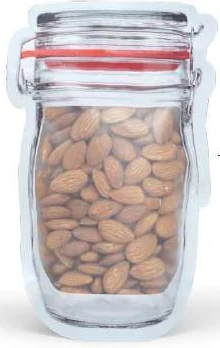
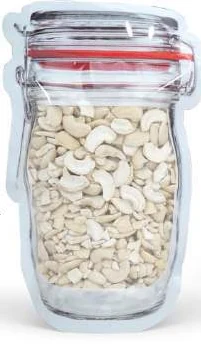
The catalogue includes jar-shaped zipper pouches and window pouches. These examples show different physical constructions; they are not interchangeable specifications. A contoured outline gives the pouch a jar-like silhouette while retaining a flexible pack construction. The narrow shoulder and top opening affect filling and access. Review the usable cavity, zipper length and artwork boundaries on a dimensioned drawing before committing to the shape.
| Format reference | Material or construction to clarify | Details to include in the brief |
|---|---|---|
| Jar-shaped zipper pouches | Clear or frosted flexible pouch construction with a zipper; the jar shape is a profile, not a rigid container. | Usable cavity and narrowest opening; die-cut outline and corner radii. |
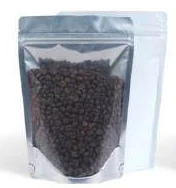
| Window pouches | A transparent window combined with paper-look or opaque flexible panels; confirm the full structure and product requirements. | Window width, height and location; product visibility at full and low fill. |
Use the reference pictures to identify the base, side panels, window or opening that you mean. A picture cannot supply the missing dimensions or material layers. If a photograph shows a finish or closure you do not want, state that difference explicitly; otherwise a visual reference can introduce an unintended requirement.
Complete the record before requesting the next sample
- Attach the filled pouches checked in the proposed gift arrangement. Identify the product or SKU and the date of the observation.
- Record the individual products and outer presentation. Keep confirmed information separate from proposed values and questions for the supplier.
- Add the actual fill weight or volume, the dimension convention, material proposal and intended closure. Include the number of designs and quantity per design when requesting a quotation.
- State which question the next drawing, sample or quotation must resolve. A change of size, closure or material should remain visible alongside the earlier reference.
This record makes the next conversation specific. It lets the design, purchasing and packing teams work from the same proposed item and shows which decision still needs evidence. Review the related product pages for format details, or prepare a custom packaging brief with the unresolved requirements.

Release a complete assembly reference
Retain the inner-unit register, bill-of-pack, filled arrangement photographs and approved box revision. State who checks product identity and complete set count during assembly. Keep a clear record of the active assortment for repeat orders and seasonal replenishment.
Send Navkar Poly Print the inner-unit requirements, product briefs and gift-box arrangement. Request pouch samples that can be reviewed individually and within the complete set, with technical evidence and delivery scope tied to the actual products and destination.
Sources and scope.
These references support the technical discussion. Product photographs illustrate formats; the material, dimensions and suitability of the proposed pack are confirmed for each project.
- UC Davis Postharvest Research and Extension: date factsheet
Dates have product-specific quality and storage considerations; no universal pouch suitability inferred.
- UC Davis walnut quality and handling guidelines
Handling and storage are material parts of nut quality; no duration or packaging guarantee inferred.
Let’s discuss your product.
Share your contents, dimensions, filling method, quantity and delivery destination. We’ll work through the proposed packaging specification with you.
Create a packaging brief