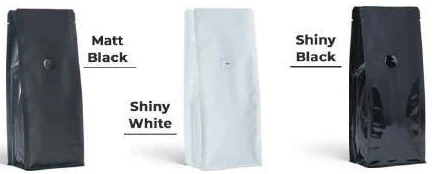
A whole-bean coffee pouch enquiry needs the actual product and roast-to-pack process brief, not only a desired bag shape. Have the coffee producer define product conditions and technical requirements before selecting construction or features. Physical fit, customer use and application suitability should remain separate approvals.
Start with the coffee producer's requirements
Identify the finished coffee, intended quantity and actual process information supplied by its owner. Record relevant product condition at filling and the intended storage and distribution brief. Do not infer those requirements from a competitor's pack or a general coffee-bag illustration.
Goglio's valve page describes a degassing component that releases gas from within a package. That is a distinct function to discuss with the coffee producer when defining the process brief. Ask whether the actual product needs it and whether the proposed supply chain can evidence it. A published component example does not confirm availability from the selected pouch manufacturer.
Record the roast-to-pack history supplied by the producer
Ask the coffee producer to describe the actual sequence and product condition relevant to packing. Record the finished coffee, roast reference where applicable and the information the technical owner considers necessary. Do not prescribe a waiting period from a competitor's practice or an internet rule.
A time-resolved coffee degassing study measured gas release from whole and ground samples under controlled conditions. Its publisher abstract describes differences in release amounts and kinetics. That finding supports a process-specific discussion; it does not provide a universal packing interval or approve a component for the buyer's coffee.
Keep the producer's required function distinct from a preferred visual format. A desired flat base or zipper concerns one part of the proposal. A required specialised gas-management function needs its own capability response and relevant evidence.
If process information is incomplete, name the missing input and accountable owner. The supplier can still discuss geometry within a bounded preliminary scope, while the actual application decision remains dependent on the producer's technical requirements.
Keep feature requests explicit and conditional
If the producer requires a specialised feature or process function, write that requirement clearly and ask whether the supplier can support it with suitable evidence. Do not presume valve, degassing or other unconfirmed capabilities. An enquiry can identify a requirement without claiming that a particular manufacturer supplies it.
The ICPE beverage chapter treats coffee-specific packaging concerns. Its historical material examples are not a current procurement prescription. Have the actual product and technical teams assess the proposed complete system and any required function.
Ask for a capability response that can be reviewed
List each required function and ask whether the proposed supply route can support it. Request identification of the component, construction and evidence where relevant. A generic yes to coffee packaging does not explain the scope of a specialised function.
Keep any unconfirmed requirement conditional in the internal proposal. A published valve example is useful for defining a question but does not establish that a selected manufacturer provides it. The commercial enquiry should allow an honest response about supported and unsupported requirements.
For an illustrative requirement table, one row can cover the confirmed physical format and another the producer's specialised function. The first may progress to a fit sample while the second awaits a capability and technical decision. Do not merge those rows into a blanket approval.
Record who owns integration into the actual packing process. A component's documented purpose and the assembled pack's suitability are related but distinct. The relevant owners should review how the complete proposed system addresses the coffee producer's conditions.
Use a coffee process-to-pack brief
| Brief area | Required input | Decision supported |
|---|---|---|
| Product | Actual finished coffee reference | Application identity |
| Process | Producer-supplied filling and related conditions | Technical review |
| Quantity | Intended sale mass and range | Sample fit |
| Packing route | Established interface and technical owner | Component proposal |
| Use | Opening, pouring and reclosure task | Convenience review |
| Evidence | Required functions and supporting documents | Bounded approval |
This original brief makes missing process information visible. Mark an open requirement as pending rather than filling it with a universal roast-to-pack rule.
Use representative beans for geometry decisions
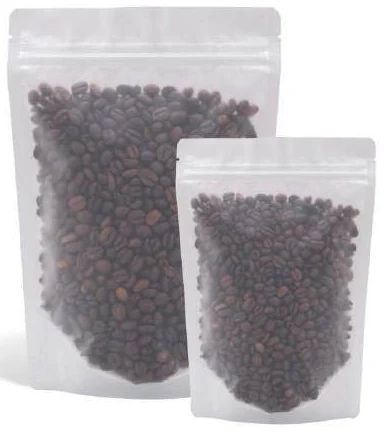
Identify the intended quantity and ordinary bean variation through the producer's specification. Fill dimensioned candidates by the planned or clearly identified development method. Record entry, product position before closing and complete filled shape.
Watch working space as well as final appearance. A manually rearranged sample can look suitable while the intended operation needs further access review. Record every intervention and distinguish the development observation from actual line-interface evidence.
For an illustrative comparison, two candidates may hold the stated quantity while only one leaves comfortable access to the intended closing region. Record the relevant sample and task. This supports a geometry decision without claiming anything about barrier, gas management or storage duration.
If one component is proposed for several quantities, observe the relevant filled conditions separately. The display profile and base behaviour may differ with product level. A full-pack image should not automatically establish the smaller quantity's presentation or the partly used pouch's standing behaviour.
Review physical fit with actual beans
Use representative finished beans and the intended quantity. Observe normal filling, closure clearance and the complete filled shape. Keep the actual material proposal and feature arrangement identified. An unprinted fit sample can answer some geometry questions while leaving technical suitability and final graphics open.
Check the front and side presentation in the intended retail arrangement. If several quantities share a component, assess the relevant range. Do not transfer a full-pack standing result automatically to a smaller fill or a partly used pouch.
Match access to the coffee user's equipment
State whether the customer pours into a grinder hopper, transfers into a container or repeatedly uses a scoop. Use the actual representative receiver or tool where practical. The intended task determines what access needs observation.
Begin with the complete unopened sample and record the resulting mouth. A large initial component opening may leave a smaller usable access after the intended opening path. Include ordinary grip and any product caught near folds during transfer.
An illustrative finding may favour one geometry for complete transfer and another for repeated scooping. The decision follows the actual proposition. Avoid declaring a universally best whole-bean coffee shape from a single informal use comparison.
If reclosure is part of the proposal, observe it after normal removal at a defined partly used state. Record any required instruction or product-clearing action. Keep the convenience conclusion separate from the producer's technical assessment of the complete storage system.
Observe opening and ordinary removal
Start from the complete unopened sample. Perform the intended opening and pouring or scooping task. Record grip, bean access and reclosure if specified. A small opening that looks neat may not suit the actual receiving container or removal method.
For an illustrative design issue, a sample may display well but require repeated shaking to transfer the last beans through the opening. The next review should address that task. It should not become an unsupported claim about gas management, barrier performance or storage life.
Close geometry and technical questions on their own evidence
Summarise physical findings, supported capabilities and remaining technical gates separately. A candidate may advance on fit while another requirement remains open. This is a useful development decision when its scope is explicit.
Reconcile the final drawing, construction, feature arrangement and artwork before production release. If the proposed production system differs from the development sample, have the responsible owners identify affected evidence. A familiar silhouette does not establish unchanged function.
Keep the coffee product and process references attached to the approved pack. A later roast, quantity or operating change should prompt an impact review where relevant, with a written reason for retaining earlier evidence.
For procurement, record actual quantities, destination and commercial scope alongside the technical references. A specialised component, integration service or other operation should be clearly included or excluded in the offer. This prevents a proposal for an empty physical pouch from being interpreted as approval or supply of the producer's entire coffee-packing system.
Spice packaging: a practical specification example
A tea, coffee or spice buyer needs a material and closure brief as well as a visual style. A coffee valve is separate from a zipper; a paper-look surface is separate from the inner structure; a sachet is separate from a larger repeat-use pack. Start with the product form and use pattern, then compare the required opening and the printed panel that remains available.
For this decision, start with the powder or whole-spice form and serving pattern. The useful output is the usable opening and closing clearance checked for that product. Put that output beside the relevant quotation, drawing or sample rather than leaving it in a separate email. This is an illustrative decision exercise, not a report of a completed customer trial.
Product references to make the discussion concrete
The catalogue includes coffee pouches with valve and kraft paper pouches. These examples show different physical constructions; they are not interchangeable specifications. A degassing valve and a reclosable zipper serve different purposes. Choose the pouch geometry first, then specify the valve position, zipper and final top seal as separate features. Stand-up, side-gusset and flat-bottom examples help compare panel area and shelf footprint.
| Format reference | Material or construction to clarify | Details to include in the brief |
|---|---|---|
| Coffee pouches with valve | Paper-look or opaque flexible laminate with an optional degassing valve; the complete barrier structure is specified for the coffee and storage brief. | Coffee form and intended fill; packing interval after roasting. |
| Kraft paper pouches | Kraft or paper outer with a product-specific inner construction; paper appearance does not establish a plastic-free composition. | Paper colour and surface preference; full layer structure and thickness. |
Use the reference pictures to identify the base, side panels, window or opening that you mean. A picture cannot supply the missing dimensions or material layers. If a photograph shows a finish or closure you do not want, state that difference explicitly; otherwise a visual reference can introduce an unintended requirement.
Complete the record before requesting the next sample
- Attach the usable opening and closing clearance checked for that product. Identify the product or SKU and the date of the observation.
- Record the powder or whole-spice form and serving pattern. Keep confirmed information separate from proposed values and questions for the supplier.
- Add the actual fill weight or volume, the dimension convention, material proposal and intended closure. Include the number of designs and quantity per design when requesting a quotation.
- State which question the next drawing, sample or quotation must resolve. A change of size, closure or material should remain visible alongside the earlier reference.
This record makes the next conversation specific. It lets the design, purchasing and packing teams work from the same proposed item and shows which decision still needs evidence. Review the related product pages for format details, or prepare a custom packaging brief with the unresolved requirements.

Request a proposal with clear boundaries
Link product, process, drawing, features and evidence requirements in the enquiry. Ask the supplier to state which requirements it can propose and which remain unsupported or require another route. Keep commercial scope, actual destination and sample dependencies explicit.
Send Navkar Poly Print the coffee process-to-pack brief and representative product details. Request a dimensioned proposal and an honest capability response, with technical signoff required for the actual coffee process and any specialised function before production release.
Sources and scope.
These references support the technical discussion. Product photographs illustrate formats; the material, dimensions and suitability of the proposed pack are confirmed for each project.
- ICPE: packaging of beverages including tea and coffee
Historical technical chapter differentiating tea and coffee concerns; no old numerical market shares or laminate recipes adopted.
- Goglio: valves for flexible packaging
Primary component-manufacturer page describes the gas-release function of a degassing valve; no packing interval, universal coffee requirement, shelf-life or Navkar valve capability claimed.
- Time-Resolved Gravimetric Method To Assess Degassing of Roasted Coffee
Publisher abstract describes time-resolved gas-release measurements in specified whole and ground samples; no universal packing interval or supplier capability inferred.
Let’s discuss your product.
Share your contents, dimensions, filling method, quantity and delivery destination. We’ll work through the proposed packaging specification with you.
Create a packaging brief