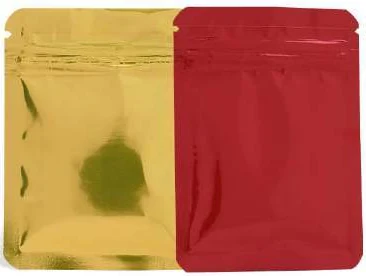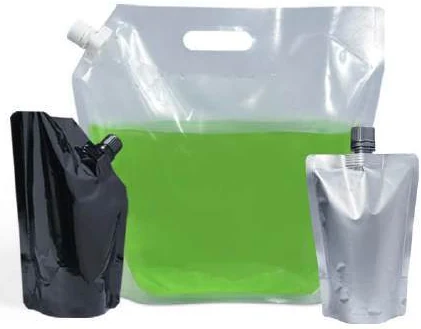
Choose between premade pouches and rollstock by deciding where the package will be formed and who will control that operation. Rollstock moves forming work to the packing route; premade pouches arrive with much of the geometry already created. Neither route is automatically cheaper or easier. The useful comparison is the complete system needed to produce an acceptable filled unit, including start-up, changeovers and final closure.
Map what each party supplies
For premade pouches, define which seals and features arrive finished, where the product enters and what the filling team must close. For rollstock, define the web, repeat, unwind and the package the equipment will create. The word automatic does not resolve these details: different systems have different handling and forming requirements. Ask for a route drawing that starts at receipt of the empty packaging and ends with an accepted filled pack. Put any third-party co-packer in the map so assumptions about equipment do not pass unnoticed between buyer and converter.
Compare changeovers as real events
A new flavour may change only artwork, while a new pack size can affect forming components, pouch handling, dosing, registration or cartons. Ask the line owner which changes need parts, adjustments and another trial. Count the SKUs and likely batch pattern before comparing quotes. Avoid treating forecast annual volume as one uninterrupted production run. Many short batches can behave differently from a few long runs, even when the yearly number of packs is the same. Record what remains common and what must be reset for each variant.
Use a common cost boundary
Define a usable filled unit as one that meets the agreed fill, closure, appearance and identification requirements. Compare packaging purchases, start-up material, handling labour, changeover effort and inspection within the same boundary. Use actual quotations and observed trial results. Do not assign a standard waste percentage to either route. If one supplier quotes by mass and another by piece, obtain the conversion assumptions and verify them against the agreed dimensions and structure. Separate a trial estimate from a demonstrated production result so a spreadsheet does not create false confidence.
Create a forming-ownership ledger
The ledger below makes the route comparison reviewable by procurement and the packing team. Complete it for both options, using the same product, pack quantity and acceptance criteria.
| Record | What to capture and how to use it |
|---|---|
| Forming responsibility | Name the party that creates the package geometry and identify the approved drawing. Ask how size and format changes enter that process so the purchasing team understands which dependencies travel with the chosen route. |
| Closing responsibility | Identify every seal completed after product entry and the person who approves its trial. Include spout or zipper interfaces where applicable; a finished-looking empty pouch may still require an essential final closure operation. |
| Changeover scope | List the SKU changes expected in a normal month and the corresponding parts, adjustments and approvals. Use the line owner's response to compare operational fit rather than assuming either supply form offers simple changeovers. |
| Usable-output basis | Specify accepted filled units, trial conditions and which start-up or rejected units are counted separately. Use this definition for both routes before converting purchasing quantities into a comparative cost per accepted pack. |
| Inventory unit | Record whether stocks are controlled as reels, pieces, mass or another agreed unit. Link the incoming identity to artwork and specification revisions so an apparent stock balance cannot conceal incompatible or obsolete packaging. |
Keep costs in a separate quotation sheet linked to this ledger. The ledger answers who performs the work; the quotation sheet answers what the agreed work costs. Both are needed to approve a route.
Illustrative comparison without a price prediction
A brand forecasts 120,000 packs across six designs. Its co-packer can fill a proposed premade format, while a rollstock option still needs a machine review. Annual demand alone cannot justify selecting rollstock. The buyer first splits demand by design and batch, obtains the line review and then requests comparable quotations. If only 10,000 accepted units are observed in a trial, that result describes the trial boundary. It is evidence for a decision, not proof that every future size or product will run identically.
Mespack lists both supply routes. Syntegon provides a primary VFFS equipment reference.
Follow the packaging through the filling station
With rollstock, film arrives wound on a reel and the packing operation creates the required package geometry. With a premade route, the converter has already made the pouch body, while the filler must still handle the pouch and complete the agreed final closure. These routes move work between organisations. They also create different incoming checks and different reasons for a line to stop.
Walk the proposed material through the actual station with its operator. For rollstock, identify reel mounting, web path, registration, forming and closure. For premade pouches, identify magazine loading, pouch separation, opening, support during dosing and top sealing or fitment closing. Do not assume that a line which handles a plain pouch can automatically handle a zipper or a spout.
Read a machine description as a boundary
Mespack's premade machine page identifies pouch feeding, transfer, opening, filling and sealing. Its IMH page describes a particular hybrid rollstock and premade solution. Together they show why the route must be confirmed for the named equipment rather than inferred from the general term “pouch packing”.
Ask the line owner to list the accepted format and construction together. A pouch may have the right external dimensions yet behave differently during opening. A film may have the expected thickness yet need a different forming or sealing assessment. The useful response is a documented interface review, followed by a representative trial where required. A broad equipment brochure is an introduction to that discussion.
Map costs to the party doing the work
Create two columns headed “converter” and “filler”. Place pouch forming, reel handling, magazine loading, first closure, final closure, setup material and inspection in the relevant column. Add a third column for costs that the brand retains, including artwork changes, transport and obsolete stock. This exposes charges that might otherwise appear twice or disappear between quotations.
For an illustrative order of 5,000 saleable packs, compare both routes on that same output. If a quotation covers 5,000 empty units while the other covers 5,000 filled units, the prices have different denominators. Ask for equivalent scope before calculating a difference. Keep tooling and setup as separate amounts so their treatment across repeat orders remains visible. No universal break-even quantity follows from the route names alone.
Plan the awkward transitions
A filling trial should include loading the first material, replenishment and the end of a batch. A short uninterrupted run can miss problems that occur when a new stack of pouches is introduced or when another reel is mounted. Observe how the operator confirms identity and orientation before restarting. Record the actual sequence rather than prescribing an unverified machine setting.
Consider how product or artwork variants will change over. A rollstock route may need the correct reel, repeat and unwind combination. A premade route may need the correct pouch stack, mouth geometry and opening arrangement. Both need controls that prevent a visually similar variant from entering the wrong product run. Assign ownership of leftover material before the trial ends.
Choose the route the organisation can sustain
The final route decision should explain who provides the incoming specification, who approves the packing setup and who investigates a failed closure. Include the available skills, floor arrangement and material handling constraints. A promising trial becomes more useful when the people who will run regular production can repeat its documented checks.
Where both routes remain feasible, compare the consequences of a demand change. Ask how another quantity, format or product variant would be evaluated and what stock would become unusable. This is a scenario discussion, not a forecast. It helps the buyer select a route with understandable operational commitments instead of relying on an assumption that either premade pouches or rollstock is inherently cheaper.
Premade versus rollstock: a practical specification example
A brand is choosing a dry-food pack before commissioning artwork. Compare the same product in two filled samples, using the same net weight and display space. The useful difference may be the usable opening, footprint or closing method rather than the empty pouch silhouette. A window or valve is another specification within a format, so it should not silently replace the original comparison.
For this decision, start with the existing filling route and proposed saleable output. The useful output is separate quotations for the pack and the agreed packing route. Put that output beside the relevant quotation, drawing or sample rather than leaving it in a separate email. This is an illustrative decision exercise, not a report of a completed customer trial.
Product references to make the discussion concrete
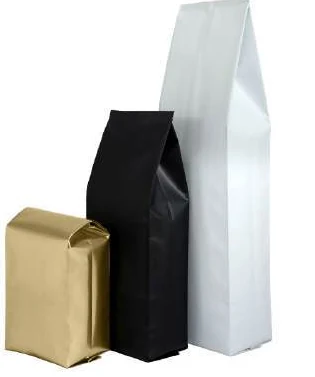
The catalogue includes flat-bottom pouches and window pouches. These examples show different physical constructions; they are not interchangeable specifications. A box-style base gives the filled pack a distinct footprint, with separate front, back and side panels. Compare a plain top opening with a regular zipper, and use filled samples to decide the shelf depth and panel proportions.
| Format reference | Material or construction to clarify | Details to include in the brief |
|---|---|---|
| Flat-bottom pouches | Flexible laminate with paper-look or opaque outer options; the appearance alone does not identify the full layer structure. | Base width and full opened depth; net fill and product bulk. |
| Window pouches | A transparent window combined with paper-look or opaque flexible panels; confirm the full structure and product requirements. | Window width, height and location; product visibility at full and low fill. |
Use the reference pictures to identify the base, side panels, window or opening that you mean. A picture cannot supply the missing dimensions or material layers. If a photograph shows a finish or closure you do not want, state that difference explicitly; otherwise a visual reference can introduce an unintended requirement.
Complete the record before requesting the next sample
- Attach separate quotations for the pack and the agreed packing route. Identify the product or SKU and the date of the observation.
- Record the existing filling route and proposed saleable output. Keep confirmed information separate from proposed values and questions for the supplier.
- Add the actual fill weight or volume, the dimension convention, material proposal and intended closure. Include the number of designs and quantity per design when requesting a quotation.
- State which question the next drawing, sample or quotation must resolve. A change of size, closure or material should remain visible alongside the earlier reference.
This record makes the next conversation specific. It lets the design, purchasing and packing teams work from the same proposed item and shows which decision still needs evidence. Review the related product pages for format details, or prepare a custom packaging brief with the unresolved requirements.
Approve the route and the handover
Attach the ledger to the chosen packaging specification and identify who will accept incoming material, run the trial and release normal production. Carry open machine questions into the request for quotation rather than hiding them in an email conversation. Reopen the comparison if the packing site, product behaviour or batch pattern changes. The final decision should explain which route the current operation can demonstrate and which commercial assumptions still depend on actual production.
Send the completed forming-ownership ledger with your product and filling details to Navkar Poly Print for a project-specific discussion. Ask for the proposed specification, evidence required and open questions to be recorded before quotation approval.
Sources and scope.
These references support the technical discussion. Product photographs illustrate formats; the material, dimensions and suitability of the proposed pack are confirmed for each project.
- Mespack solution finder
Equipment supplier distinguishes rollstock and premade-pouch routes; no Navkar equipment inference.
- Syntegon SVX vertical packaging
Primary equipment reference for vertical forming, filling and sealing; machine-specific claims are not transferred.
- Pre-Made Pouch Packaging Machine
Identifies the actual premade handling operations; no general machine compatibility claim.
- IMH
Describes a particular hybrid rollstock/premade machine. Limits: Example of route options only; not evidence that every line switches routes.
Let’s discuss your product.
Share your contents, dimensions, filling method, quantity and delivery destination. We’ll work through the proposed packaging specification with you.
Create a packaging brief