Compare a proposed pouch component substitute with the exact component in the accepted assembly. Create an old-versus-proposed record before asking whether it can replace the existing part. Similar colour, shape or a supplier's description of equivalence cannot identify all the interfaces that need review.
Start with the component and its neighbours
Record the current component code, revision and supplier reference, then locate it on the accepted assembly drawing or bill of materials. For a proposed cap, identify the matching spout; for another feature, identify the surfaces or parts it interacts with. Keep the body drawing, product and filling route references available to the reviewers.
Define the replacement proposal in the same way. If the supplier provides only a photograph, request an identified drawing and relevant information. A side-by-side image can reveal a visible difference but cannot establish material identity, functional fit or product compatibility. Record those questions without filling gaps from appearance.
Build a three-state comparison
Use three evidence states: documented same, documented different and not established. Give each entry a source reference. Do not mark a field same merely because both documents omit it. Where confidential material information is needed, let the responsible specialists arrange an appropriate exchange rather than adding guesses to a purchasing spreadsheet.
The GS1 traceability standard connects identities with recorded events. Apply that discipline to the two component references and sample submissions. A replacement comparison needs to remain retrievable after the preferred candidate changes or an alternative is rejected.
Map differences to questions, not automatic test lists
For each documented difference or unknown, ask which function or interface might be affected. The competent teams decide what supporting information, samples or evaluation is appropriate. Keep dimensional fit, product-pack assessment, filling interface and user operation as separate questions where relevant.
ASTM's packaging catalogue lists different property methods. The existence of a method does not make it the required assessment for this substitution. Record the reviewer's chosen evidence and rationale instead of inventing a universal requalification programme or pass limit.
Use an old-versus-proposed component worksheet
| Comparison row | Existing component | Proposed substitute | Decision input |
|---|---|---|---|
| Identity | Accepted part and drawing revision | Proposed part and drawing revision | Are both references complete? |
| Connected interfaces | Neighbouring part and assembly reference | Proposed matching interfaces | Which relationships need review? |
| Documented characteristics | Applicable drawing or information reference | Corresponding supplied information | Same, different or not established |
| Evidence coverage | Reports or observations tied to current part | Supplied evidence for proposed part | What may remain applicable? |
| Open questions | Accepted baseline assumptions | Missing or changed information | Named reviewer and next evidence |
Keep the comparison factual. The supplier's equivalence statement can be entered as a claim to review, with its supporting reference; it is not a substitute for the decision owner accepting the evidence.
Define the substitution boundary precisely
State whether the proposal replaces a cap, spout, zipper, cord, valve or another identified part. Locate that part in the accepted assembly and list its connected interfaces. A component can have relationships with other components, the pouch body, product, filling process and user operation. Ask the responsible owners which are relevant. The comparison should follow the actual assembly rather than a standard test list copied from another substitution.
Keep the reason for the proposal separate from the technical decision. Availability, appearance or another commercial objective can explain why a substitute is being considered, but it does not establish equivalence. Record the proposed benefit as a claim or objective with its source. The buyer can then assess it alongside evidence without letting the business reason become an unsupported conclusion about fit or suitability.
Require comparable information for both parts
Collect the accepted part reference, drawing revision and relevant information used for its original decision. Request corresponding references for the proposed part. Where the information categories differ, identify the gap rather than forcing a same entry. A field omitted from both documents is not evidence of sameness. Ask for clarification through the appropriate technical exchange when confidential information is involved.
Record the source of every comparison entry. A supplier declaration, dimensioned drawing, report and photograph provide different kinds of information. An equivalence statement belongs in the record with its supporting evidence, not in place of it. If the accepted baseline lacks a relevant detail, return that question to the assembly owner. The absence of a baseline should not be resolved by assuming the proposed part defines it retrospectively.
Use three states consistently
Mark documented same only when comparable identified information supports it. Mark documented different when the sources establish a difference. Use not established for missing, ambiguous or non-comparable information. Include a short reason. This prevents the worksheet from turning uncertainty into a favourable answer simply because the proposed part looks familiar or the buyer needs a quick alternative.
Avoid a numerical equivalence score that averages unrelated characteristics. Several documented similarities cannot cancel one unresolved critical interface. Ask the competent owners which questions must be closed before a decision and which differences may be acceptable under a stated scope. The outcome needs an evidence-based rationale for the actual assembly, not an overall percentage suggesting technical completeness.
Map a difference to its possible consequence
For each difference or unknown, identify the function or interface it could affect and the person who can assess it. Keep this as a question until evidence supports a conclusion. A changed dimension may prompt a fit question; a changed material reference may prompt a product or process assessment. Procurement should coordinate those questions without prescribing a universal evaluation programme or assuming the observed difference causes a failure.
Ask whether existing evidence remains relevant and why. Evidence can sometimes support an unchanged relationship, while another changed relationship needs new information. Record the owner's rationale explicitly. Do not require complete repetition automatically, and do not carry all earlier approval forward automatically. The comparison's value is identifying the affected decision rather than treating every substitution as either trivial or a wholly new pouch development.
Extend the same-colour cap example
In the illustrative C1-to-C2 proposal, keep current spout S1 and assembly A1 identified. Colour may be documented through the agreed reference while the C2-to-S1 interface remains not established. Request the relevant part information before assessing that interface. If the supplier instead proposes another spout S2, the scope has expanded from one component replacement to a changed component pair. Give that proposal a separate candidate and identify the additional interfaces it introduces.
The comparison still makes no fit or product-suitability conclusion. It gives the technical team an answerable set of questions and prevents one visible similarity from hiding a broader assembly change. Record the exact candidate that the reviewers eventually assess. Photographs of C2 beside S1 should not later imply the combination was accepted if the actual reviewed proposal used S2.
Preserve the decision and its limits
Write the authorised conclusion against the proposed component and assembly references. Identify accepted use, remaining conditions and evidence relied on. Keep rejected candidates and their reasons in the history while naming the active baseline clearly. The separate supplier-notification and introduction process can manage affected orders and stock transition after the appropriate decision. This article's deliverable remains the factual component comparison and scoped technical enquiry.
Retain the comparison date and decision owner with the active assembly record. This lets a repeat-order reviewer identify which component proposal was actually considered and distinguish it from a later similar-looking alternative.
Reconcile substitute evidence sources
Check where each proposed component reference came from. A drawing, specification and physical specimen can carry different revision states, so reconcile them before the comparison reaches its technical reviewer. Keep documented similarities separate from differences and relationships that remain unestablished.
If the supplier describes the substitute as equivalent, ask which interfaces and evidence that statement covers. Retain the response against the exact candidate and its neighbouring parts. The comparison can then be issued for a scoped decision, with no implied fit or product-suitability conclusion created from an appearance description.
Material substitution: a practical specification example
A sample looks acceptable, but the approval record must explain what was actually checked. Keep the current drawing and material proposal with the sample identity. A photograph can show a window, zipper or outline; it cannot establish an unmeasured performance result. Record the product, conditions and acceptance question so another team member can understand the limits of the observation.
For this decision, start with the proposed difference from the approved construction. The useful output is an explicit decision on which checks must be repeated. Put that output beside the relevant quotation, drawing or sample rather than leaving it in a separate email. This is an illustrative decision exercise, not a report of a completed customer trial.
Product references to make the discussion concrete
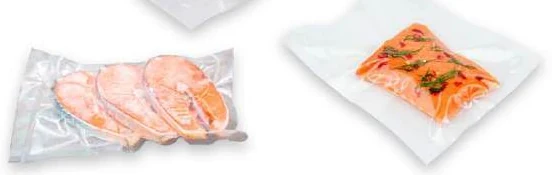
The catalogue includes vacuum packaging bags and window pouches. These examples show different physical constructions; they are not interchangeable specifications. Vacuum bags are specified around the product shape, evacuation route and final seal. Start with the usable opening and finished pack dimensions rather than the empty bag alone. Sharp corners, moisture in the seal area and product movement need particular attention during sample review.
| Format reference | Material or construction to clarify | Details to include in the brief |
|---|---|---|
| Vacuum packaging bags | Clear or opaque flexible vacuum-bag construction; layer structure, thickness and surface requirements are confirmed for the packing method. | Product shape, edges and fill weight; usable opening and final seal band. |
| Window pouches | A transparent window combined with paper-look or opaque flexible panels; confirm the full structure and product requirements. | Window width, height and location; product visibility at full and low fill. |
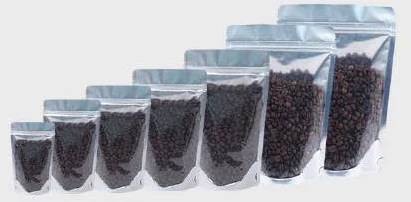
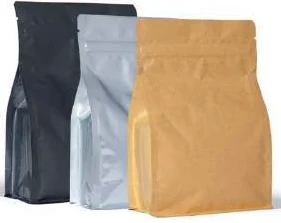
Use the reference pictures to identify the base, side panels, window or opening that you mean. A picture cannot supply the missing dimensions or material layers. If a photograph shows a finish or closure you do not want, state that difference explicitly; otherwise a visual reference can introduce an unintended requirement.
Complete the record before requesting the next sample
- Attach an explicit decision on which checks must be repeated. Identify the product or SKU and the date of the observation.
- Record the proposed difference from the approved construction. Keep confirmed information separate from proposed values and questions for the supplier.
- Add the actual fill weight or volume, the dimension convention, material proposal and intended closure. Include the number of designs and quantity per design when requesting a quotation.
- State which question the next drawing, sample or quotation must resolve. A change of size, closure or material should remain visible alongside the earlier reference.
This record makes the next conversation specific. It lets the design, purchasing and packing teams work from the same proposed item and shows which decision still needs evidence. Review the related product pages for format details, or prepare a custom packaging brief with the unresolved requirements.
Issue the comparison for a scoped decision
Complete four actions: identify the existing assembly; obtain the proposed part references; classify differences and unknowns; and route each question to its owner. Retain the comparison and the authorised conclusion with the assembly record. Supplier notification, affected-order communication and stock transition belong in the separate commercial change process after the appropriate decision.
Send Navkar Poly Print the accepted component reference, proposed substitute and completed comparison sheet so the technical enquiry addresses the actual interfaces and evidence gaps.
Sources and scope.
These references support the technical discussion. Product photographs illustrate formats; the material, dimensions and suitability of the proposed pack are confirmed for each project.
- ASTM: paper and packaging standards catalogue
Standards owner lists distinct measurement methods; method selection and acceptance limits need technical agreement.
- GS1: Global Traceability Standard
Primary standards source connects identities and shipment/receipt event records; this article offers an original simplified buyer worksheet.
Let’s discuss your product.
Share your contents, dimensions, filling method, quantity and delivery destination. We’ll work through the proposed packaging specification with you.
Create a packaging brief