A personal care refill pouch filling trial should connect the actual formula, complete pouch assembly and intended line. Agree the questions before the trial so production observations can support a defined decision instead of becoming an unreferenced demonstration.
Start with the incoming pouch condition
Draw the pouch as it reaches the filler, including installed components and any opening left for filling. Identify how the line presents, holds, fills, closes, codes and discharges the pack. The line owner should supply and approve equipment-specific information; purchasing should not copy operating settings from another product.
Include the formula revision and the authorised conditions under which the trial will run. Use the product owner's procedures for preparation, handling and disposition. The trial is not a substitute for compatibility assessment or a safety conclusion.
Define the actual incoming component
Show the pouch as supplied to the line, including installed parts, cap state and available filling opening. Use a common orientation convention between converter and filler. A finished-pack photograph can hide a different assumption about the incoming edge or component state.
Identify the actual line and authorised reviewer. Ask the owner to provide relevant interface requirements for presentation, holding, opening, filling, closing, coding and discharge. Procurement should collect accepted references rather than invent settings from another line.
For an illustrative mismatch, the filler expects an open top edge while the proposed supply drawing shows it closed. Resolve that route before ordering trial material. Neither a newer artwork image nor a generic machine category settles the conflict.
Keep formula and product-batch identity with the incoming drawing. The physical component and actual product together define the trial input. A changed formulation or substitute development liquid should be visible in the plan, with its intended purpose and limits.
Define observations before starting
Create separate rows for pack handling, filling access, final closure, coding and downstream transfer. Ask the relevant specialists to define acceptance criteria and any measurements. Record interruptions and changes with the sample groups they affect, rather than presenting all trial output as one uniform batch.
Cosmetics Europe separates packaging information from specialist assessment. Keep the same discipline in the trial report: a line observation is one input to release, not a complete product approval.
Give the run a question and an observation plan
State which decision the trial must support. Handling access, final closing, coding and downstream transfer are different questions. The operating and technical owners should define the applicable criteria and measurements for the actual construction and process.
Separate ordinary observations from technical conclusions. A pause at presentation, contact near a feature or interrupted discharge can identify a useful event. Its cause and consequence require the relevant review. Do not describe every interruption as a pouch defect.
An illustrative plan might focus on incoming presentation and closing readiness while retaining other gates elsewhere. State those limits in the trial brief so business reviewers understand what the run can demonstrate.
ISO/TR 18811's public scope concerns a justified cosmetic stability programme. A filling observation has another purpose. Link relevant studies to the same assembly without treating the line run as their substitute or inventing stability conditions within the trial report.
Agree how output samples will be labelled before the run. Their identity should survive removal from the line and movement to another reviewer. A photograph or unlabelled pouch cannot reliably distinguish two similar trial groups later.
Record any sample set assembled after the run from different output periods. It can be useful for a specific review, but it should not appear to represent one unchanged condition. Keeping the group history intact helps the relevant owners interpret the findings and select a focused follow-up.

Keep receiver performance in a separate row
ZACROS considers receiver opening in its refill design description. A pack that runs on a filler still needs the intended refill task reviewed. Link the receiver trial to the same assembly code so the teams do not approve different versions by accident.
Split the record when an input changes
Record the actual sequence and sample groups. A changed drawing, component, formula or authorised operating condition needs an identified boundary. Output before and after that point should not be presented as one uniform condition.
Keep the change reason and owner beside the new group. If more than one input changes, the result concerns the revised setup. It can still guide a commercial choice, but it cannot isolate the effect of one chosen variable without a suitable design.
For an illustrative run, group T1 may use one assembly and T2 a revised geometry. Record any accompanying product or process difference before discussing the observation. A convenient improvement label can otherwise conceal why the second group looked different.
Retain interruptions, unassessed output and sample exclusions with reasons. Replacing an awkward event silently with a successful repeat reduces the report's usefulness. The operating owner needs the true sequence to decide what can advance and what needs another comparison.
Separate filling-trial output groups
Suppose a trial begins with sample assembly T1 and a revised pouch geometry T2 arrives later. Split the report at that change. Retain the line reference, product batch, incoming condition and closing record for each group. If T2 appears easier to handle, record what was observed and which other conditions changed before drawing conclusions. Do not attribute improvement to geometry alone when product or line conditions also changed. Purchasing can then request a meaningful follow-up trial or accept a scoped recommendation from the technical owners, supported by traceable records.
Connect output samples to other application decisions
Give representative output samples the identity needed for later review. Link actual formula, batch, incoming state, assembly and closing references. A later compatibility or receiver assessment needs to know which complete pack it received.
Allocate samples deliberately where assessments are destructive. A pouch opened for one examination cannot later represent an unopened first-use task. Record sample history and the role of retained references through the approved procedure.
An illustrative successful presentation observation can coexist with an unresolved receiver task. Keep them in separate rows, using the same assembly identity. This avoids approving one geometry on the line while a different sample is used for the consumer demonstration.
Where development output differs from the intended final pack, identify the affected questions. The relevant owners decide whether results remain useful and what must be repeated. The goal is a traceable evidence chain, rather than a folder of samples whose relationship to the quotation is unclear.
Record the incoming pack and line observations
Use this original worksheet with your product and supplier team. Give each row a named owner and evidence reference; a blank answer remains an open decision.
| Record | What to enter and why |
|---|---|
| Trial identity | Record formula, product batch, pouch assembly and line references for every sample group. |
| Incoming drawing | Show installed components, available filling opening and supply condition accepted by the line team. |
| Observation plan | Define handling, filling, closing, coding and transfer questions with appropriate acceptance owners. |
| Change log | Record assembly or authorised production changes and the output groups affected. |
| Release links | Connect line evidence to compatibility, receiver and other application decisions without merging their scopes. |
Report a scoped result and the next action
State what was observed, under which actual inputs and conditions, and which decision the accountable owner made. Keep raw observations beside the conclusion. A line trial should not become an unsupported statement about compatibility, product safety or storage duration.
For open questions, name the missing evidence and owner. A specific presentation concern can guide another component sample, while another issue may require operating review. Do not default to a general request for stronger or better packaging.
Before order release, reconcile the final assembly and supply condition with the accepted interface references. Route later substitutions through the relevant review. A component that looks similar may have a different evidence history.
Retain the trial report and matched references in the repeat-order file. Future line, formula or geometry changes can then reopen the affected tasks with a clear baseline. Procurement receives a defined current proposal and an honest account of the remaining application gates.
Refill closure: a practical specification example
A refill concept starts with the formulation and dispensing route. The contents may contact the laminate, spout and cap, so each part belongs in the compatibility brief. A clear pouch shown with another product does not prove suitability for shampoo, oil or cleaner. Keep the intended pour, refill opening and transport handling visible while comparing the package with a bottle.
For this decision, start with the spout, cap and final closing route. The useful output is a clearly identified matched closure specification. Put that output beside the relevant quotation, drawing or sample rather than leaving it in a separate email. This is an illustrative decision exercise, not a report of a completed customer trial.
Product references to make the discussion concrete
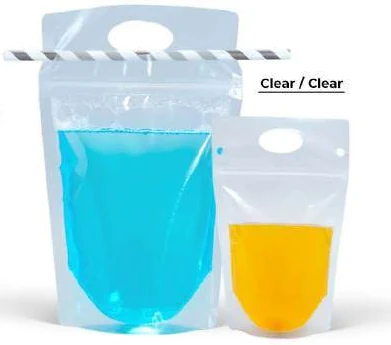
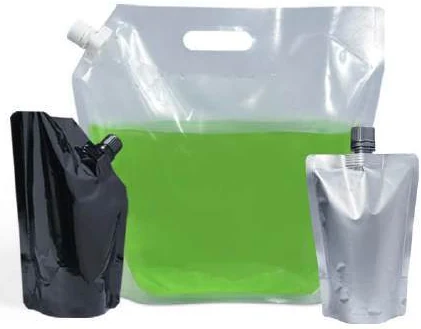
The catalogue includes spout pouches and beverage pouches with handles. These examples show different physical constructions; they are not interchangeable specifications. A fitted spout provides a controlled opening for dispensing. The reference range includes compact pouches and larger handled formats. Specify the product, fill volume, spout location and cap before developing the pouch shape; a corner spout and a top-centre spout require different layouts.
| Format reference | Material or construction to clarify | Details to include in the brief |
|---|---|---|
| Spout pouches | Flexible liquid-pack laminate with a fitted spout and cap; contact-layer and closure compatibility are reviewed for the formulation. | Fill volume and product viscosity; spout bore, position and cap. |
| Beverage pouches with handles | Transparent liquid-pack construction; contact layers and sealing requirements are reviewed for the beverage. | Beverage composition and fill volume; filling and final sealing method. |
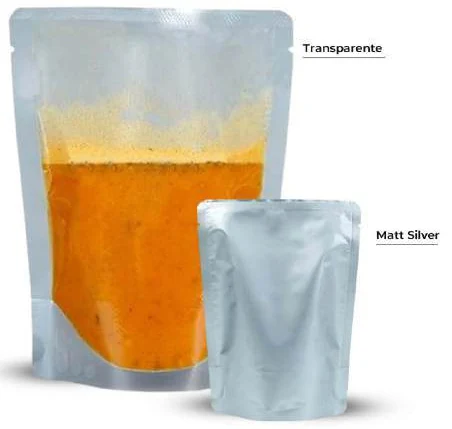
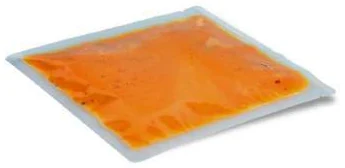
Use the reference pictures to identify the base, side panels, window or opening that you mean. A picture cannot supply the missing dimensions or material layers. If a photograph shows a finish or closure you do not want, state that difference explicitly; otherwise a visual reference can introduce an unintended requirement.
Complete the record before requesting the next sample
- Attach a clearly identified matched closure specification. Identify the product or SKU and the date of the observation.
- Record the spout, cap and final closing route. Keep confirmed information separate from proposed values and questions for the supplier.
- Add the actual fill weight or volume, the dimension convention, material proposal and intended closure. Include the number of designs and quantity per design when requesting a quotation.
- State which question the next drawing, sample or quotation must resolve. A change of size, closure or material should remain visible alongside the earlier reference.
This record makes the next conversation specific. It lets the design, purchasing and packing teams work from the same proposed item and shows which decision still needs evidence. Review the related product pages for format details, or prepare a custom packaging brief with the unresolved requirements.
Put the decision into practice
1. Define the trial scope. Ask the filling and product teams to agree which questions this run can answer.
2. Identify every input. Capture product, pouch, component and incoming-condition references before samples enter the line.
3. Record changes honestly. Split observations when inputs or conditions change, preserving the actual sequence and supporting records.
4. Issue a scoped report. State accepted findings, unresolved questions and the next decision required from each technical owner.
Share the proposed trial scope, incoming pouch drawing and line contact with Navkar Poly Print when arranging personal care samples.
Sources and scope.
These references support the technical discussion. Product photographs illustrate formats; the material, dimensions and suitability of the proposed pack are confirmed for each project.
- Cosmetics Europe: packaging information exchange
Primary industry guidance separates supplier information from the assessor responsibility; EU context does not establish Indian compliance.
- ZACROS: Flowpack NT tube refill pouch
Manufacturer relates its tube selection to contents and receiving-bottle opening; no claim Navkar makes this proprietary system.
- ISO/TR 18811:2018 official public abstract
Public scope concerns justified cosmetic stability assessment; filling trial is distinguished from that programme. No universal conditions or conformity claimed.
Let’s discuss your product.
Share your contents, dimensions, filling method, quantity and delivery destination. We’ll work through the proposed packaging specification with you.
Create a packaging brief