Choosing a packaging supplier near a filling plant is useful when proximity supports a specific buying need: sample exchange, a site visit, technical discussion or a workable delivery arrangement. Distance alone does not establish packaging suitability. Evaluate the supplier's proposed pack and the practical support route before treating a nearby address as a purchasing advantage.
Define what nearby is meant to solve
List the event that makes location important. A development team may need physical samples before artwork release. A packing operation may need a named contact during a trial. Procurement may want to inspect a proposed manufacturing site. These are different requirements and should not be collapsed into a vague promise of local service.
Record the actual addresses involved: the manufacturing site, sample dispatch point, filling plant and delivery destination. Ask whether the supplier's contact is at the plant or in a separate sales office. If a partner performs a relevant stage, identify where the stage occurs and how the supplier controls the job.
Separate proximity from line compatibility
For rollstock, the packing-line owner should confirm the reel configuration, artwork orientation and agreed trial requirements. For premade pouches, review the usable opening, filling access, closure and filled dimensions. A short journey does not compensate for an incompatible reel or a pouch that cannot be handled by the filling arrangement.
Use a controlled specification and sample identity in every technical discussion. Photographs can help explain an issue, but the supplier still needs to know which drawing, material proposal and artwork revision are being discussed. The BOBST industry overview is useful background for understanding that printing and converting are distinct stages; it does not identify a particular supplier's equipment.
Test the proposed support arrangement
Ask how a trial question will be handled. Who receives the line observations? Who can review the approved specification? How will a corrected drawing or sample be identified? Agree the communication route before the packing team starts a trial, rather than assuming a local supplier will automatically be available at the required time.
Do the same for visits and sample collection. Confirm appointment requirements, permitted areas and the purpose of the visit. A visit should answer defined questions about the proposed order. It should not replace document review or application testing.
| Proximity need | Evidence to request | Decision to record |
|---|---|---|
| Physical sample exchange | Dispatch and receiving addresses | Whether the proposed route fits the project |
| Technical discussion | Named contact and escalation route | Who reviews trial observations |
| Supplier visit | Actual production location and visit scope | Which unanswered questions the visit addresses |
| Repeated deliveries | Comparable current shipment quotation | Whether the delivered terms suit the buying plan |
Translate proximity into a task and required event
Write what the project needs to happen physically: exchange an identified sample, discuss a line observation, visit an actual site or receive an accepted order. Name the people, locations and timing involved. Nearby has little decision value until it is linked to one of these tasks. A supplier can be geographically close while its relevant production stage or technical contact operates elsewhere.
Ask which address serves each task. Record manufacturing site, sample dispatch point, visit location and goods collection point. Keep the filling plant and receiving destination separate where they differ. This prevents a short distance measured between offices from being presented as an advantage for a journey or support arrangement that uses other locations. Use current route and appointment information from the responsible parties when planning an actual exchange.
Review the support offer as a defined service
Ask how the supplier receives observations and who can review the relevant drawing or sample. Record the proposed contact route and any agreed attendance or visit scope. Do not infer an immediate response, available engineer or reserved capacity from the address. The buyer needs an arrangement appropriate to the project and confirmed by the supplier.
Provide a structured observation brief when asking for help. Include item identity, sample or batch, drawing, artwork, line reference and the factual question. Photographs should show location and detail with their references. A nearby contact still cannot interpret an unidentified pouch reliably. Better information can make the discussion useful without suggesting that a quick conversation replaces the required technical decision.
Keep line requirements in the comparison
For each candidate, map the offered output to the filling team's requirements. Record the exact reel or pouch configuration proposed and the evidence needed for its review. Do not allow proximity to compensate for an unresolved interface. Conversely, do not reject a more distant candidate solely because it needs a different physical sample exchange if its proposed arrangement can meet the actual requirement.
When one candidate supplies a stock example and another supplies an identified project sample, record the evidence difference. A quick arrival does not make the stock example representative. Ask what each sample can establish and what remains open. The comparison becomes fair when both suppliers have been asked to address the same technical and commercial scope, even if they use different development routes.
Compare delivery patterns rather than distance alone
Use actual order quantities, packing, destinations and receiving conditions to request transport proposals. Ask whether the buyer intends occasional bulk receipts or repeated smaller movements. The number and scope of those movements can affect the comparison. Do not multiply a courier rate by piece count or assume freight scales with kilometres. Use actual offers and keep their validity and conditions visible.
If a nearby supplier proposes frequent releases, ask about manufacturing commitment, supplier-held stock, ownership, payment and storage responsibilities. A short delivery journey does not mean goods are held without cost or can be called off without conditions. Compare the full arrangement with the alternative supplier's actual proposal. The commercial team can then assess whether proximity supports a useful operating plan.
Work through the two-candidate example
In the illustrative comparison, A has delivered a sample quickly but its line-specific configuration remains unconfirmed. B has an identified candidate and drawing while its destination scope is incomplete. Create separate technical and logistics action rows. Ask A to close the configuration question and B to complete the service response. Neither gap should be hidden behind an overall supplier score.
Once both responses are clear, assess the particular proximity need. If the project requires another physical review, compare the arrangements actually offered. Record availability, responsibility and any relevant commercial scope without inventing a fixed response time. The outcome may favour either candidate or require another option. The useful decision explains how the chosen arrangement supports the task, rather than rewarding an address by default.
Use visits and exchanges to resolve identified questions
Prepare a visit or sample-exchange agenda with the unresolved questions and expected evidence. Confirm permitted scope and participants through the normal project process. Keep observations, supplier statements and documents distinct in the record. A visit can be informative while leaving a product or application requirement open. Avoid turning attendance into an audit claim or implying that the buyer has inspected unvisited operations.
After the exchange, update the relevant requirement rows and name the next decision owner. Preserve the sample identities and revised references. At reorder, review whether the support and delivery arrangement still applies to the new quantity, specification and destination. Proximity is useful when its practical benefit is identified and accepted; it is not a permanent substitute for evidence, planning or a project-specific offer.
An illustrative comparison
Suppose a brand compares Supplier A close to the filling plant with Supplier B farther away. A supplies a sample quickly but has not confirmed the line-specific reel requirements. B provides a controlled drawing and an identified sample, while its delivery quotation needs clarification. Neither proposal is ready for unrestricted bulk release.
The correct next actions are different: ask A to resolve technical compatibility and ask B to complete the delivery scope. Once both proposals address the same requirement, procurement can assess whether A's proximity offers a useful benefit. Do not award a generic local-supplier preference before resolving those gaps. The example describes a decision method and contains no actual supplier performance data.
Hyderabad packaging enquiry: a practical specification example
A buyer is deciding how location affects a packaging purchase. Begin with the required product and specification, then compare communication, sampling, dispatch and delivery as separate practical questions. A nearby supplier does not automatically remove an unresolved material or artwork issue. A distant supplier does not establish a freight disadvantage until the actual shipment scope is compared.
For this decision, start with the sample-review and delivery needs. The useful output is the location-specific questions beside the product specification. Put that output beside the relevant quotation, drawing or sample rather than leaving it in a separate email. This is an illustrative decision exercise, not a report of a completed customer trial.
Product references to make the discussion concrete
The catalogue includes courier bags and side-gusset pouches. These examples show different physical constructions; they are not interchangeable specifications. Courier mailers close with an adhesive flap. Size the usable cavity around the actual item or inner pack, keeping the flap allowance separate. An invoice or POD document pocket can be included in the enquiry; confirm its dimensions and location on the drawing.
| Format reference | Material or construction to clarify | Details to include in the brief |
|---|---|---|
| Courier bags | Flexible mailing-bag film with an adhesive flap; polymer type, opacity and thickness are project specifications. | Item or inner-carton dimensions; usable height excluding the flap. |
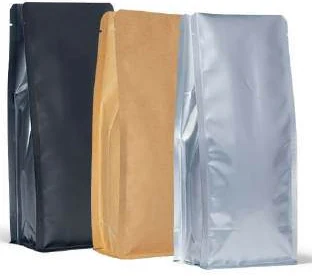
| Side-gusset pouches | Paper-look and opaque or foil-look laminates are illustrated; confirm the actual inner and outer layers for the contents. | Face width and side-gusset convention; filled height and headspace. |
Use the reference pictures to identify the base, side panels, window or opening that you mean. A picture cannot supply the missing dimensions or material layers. If a photograph shows a finish or closure you do not want, state that difference explicitly; otherwise a visual reference can introduce an unintended requirement.
Complete the record before requesting the next sample
- Attach the location-specific questions beside the product specification. Identify the product or SKU and the date of the observation.
- Record the sample-review and delivery needs. Keep confirmed information separate from proposed values and questions for the supplier.
- Add the actual fill weight or volume, the dimension convention, material proposal and intended closure. Include the number of designs and quantity per design when requesting a quotation.
- State which question the next drawing, sample or quotation must resolve. A change of size, closure or material should remain visible alongside the earlier reference.
This record makes the next conversation specific. It lets the design, purchasing and packing teams work from the same proposed item and shows which decision still needs evidence. Review the related product pages for format details, or prepare a custom packaging brief with the unresolved requirements.
Include delivery in the full comparison
Request the same shipment description from each bidder. Include origin, destination PIN code, carton count, gross weight, dimensions, receiving restrictions and the expected order pattern. Record what is included and excluded. Loading, handling, insurance and final receiving arrangements should be clear enough for a like-for-like comparison.
Where the buyer wants urgent replenishment, ask the supplier to describe the actual order and approval dependencies. Do not assume stock, spare capacity or a fixed turnaround because the plant is nearby. A repeat pack with controlled artwork may follow a different planning route from a new construction or design.
Keep a short decision record: the proximity requirement, proposed arrangement, evidence reviewed and unresolved conditions. For a Hyderabad-origin enquiry, the Navkar company page provides the starting product context. Send the actual filling requirement and destination before asking the team to confirm samples, support or delivery feasibility.
Sources and scope.
These references support the technical discussion. Product photographs illustrate formats; the material, dimensions and suitability of the proposed pack are confirmed for each project.
- BOBST flexible packaging
General printing and converting process background; not proof of Navkar installed equipment.
- Navkar Poly Print company website
Company product context and Hyderabad identity; quantities, machines, certification and delivery lanes require confirmation.
Let’s discuss your product.
Share your contents, dimensions, filling method, quantity and delivery destination. We’ll work through the proposed packaging specification with you.
Create a packaging brief