Read packaging payment terms as milestones tied to defined deliverables and documents. Ask the commercial owners to clarify amount, timing, evidence and the effect of changes before accepting the quotation, especially when development work and bulk production are separate stages.
Identify what each payment authorises
Record whether a payment relates to sample development, preparation, bulk production, dispatch or another stated stage. Ask what happens next and what must already be approved. A payment request should not be treated as evidence that the technical specification is complete.
BOBST outlines different flexible-pack processing operations. The buyer should connect payments to the deliverables in the actual proposal, not assume a universal industry sequence or assign unconfirmed machinery to the supplier.
Clarify documents and changes
Ask which invoice, order acknowledgement, approval or dispatch document supports each milestone. Record relevant currency, taxes, bank-charge treatment and validity as agreed by the commercial teams. Verify payment instructions through the organisation's established process rather than relying on an unexplained change in email details.
Agree how revised artwork, cancelled development work, quantity changes or delayed approvals affect charges and timing. These are commercial questions for the actual parties; this article does not supply a standard refund entitlement or contract interpretation.

Keep transport scope visible
ICC explains that trade terms allocate selected costs and risks. A transport rule does not, by itself, define the payment schedule. Keep the accepted payment milestones and delivery responsibilities as separate linked records, with the named place clear if applicable.
Draw the milestone sequence before comparing terms
List the proposed payments in the order they occur and identify the deliverable connected to each. Include development, preparation, production or dispatch only where the actual offer uses them. Record amount basis, currency, trigger and supporting document. A phrase such as balance before shipment needs the parties' clarification of the relevant event and evidence. Do not substitute a presumed industry practice for the proposal being assessed.
Separate a payment request, internal authorisation, completed payment and confirmation of receipt. Those events can occur on different dates. Identify who records each through the buyer's established process. A supplier may be waiting for a condition that the project team assumes is complete because finance has received an invoice. The milestone register should make that dependency visible without treating payment as a technical approval.
Define completion evidence for each deliverable
For development work, identify what the buyer receives: files, proofs, samples or another agreed output. For a production-related milestone, ask what documents or confirmation the offer requires. Keep the description specific enough for the authorised payer to assess the request. The commercial team should resolve the actual entitlement and conditions under the agreement; a generic blog checklist cannot determine whether a disputed payment is due.
Nestlé Health Science's PO conditions treat payment, quality and delivery in separate clauses. This is a buyer-specific illustration of distinct obligations, not a standard payment schedule to copy. Use the actual accepted terms and authorised review process for the transaction. A commercial milestone should identify its own evidence while remaining connected to the other required approvals.
Compare cash timing without inventing financing costs
Make a dated cash schedule using the amounts and dates in the offers. If a milestone date is conditional, label it as such. A buyer can compare when cash is required without assigning an unsupported interest rate. Where an internal financing calculation is needed, use the organisation's approved assumptions and show them separately from supplier charges. Do not present an illustrative rate as a current market fact or a universal cost of advance payment.
Keep taxes, bank charges and currency treatment visible. Ask the commercial and finance owners how each applies to the actual order. A quotation in one currency and an internal budget in another require a stated conversion basis. Record the source and date of any rate actually used. The comparison should distinguish an estimated budget from a confirmed payable amount, especially where payment or delivery will occur later.
Keep authorisation boundaries clear
State whether the current payment authorises an identified development stage, bulk production or another agreed action. If technical or artwork release remains pending, show that state explicitly. The project needs a clear instruction about what work may proceed under the actual agreement. Paying for preparation should not become an accidental assertion that the final product-pack combination has been assessed.
Name the people able to authorise changed work. A brand reviewer may request another proof while procurement owns the commercial approval. The supplier should receive a clear route for confirming any new charge before it acts. This reduces ambiguity about whether a comment was feedback within the included revision scope or an instruction to commission additional work. Record the accepted change and its effect on the milestone sequence.
Review delay, cancellation and revision scenarios
Ask what happens commercially if the buyer changes artwork after paid preparation, delays a required approval or decides not to proceed. Obtain the proposal's actual conditions and route unclear terms to the authorised commercial owner. Do not assume a refund, credit or cancellation right from a different supplier's arrangement. The aim is to understand the choice before accepting it, not to supply an interpretation of a future dispute.
For an illustrative project with development and bulk stages, suppose the buyer accepts the visual layout but the material question remains open. Record that split decision and ask which work the accepted terms permit next. If another candidate is required, obtain the changed deliverable, price and schedule before authorisation. Keep the original payment history intact. A later commercial adjustment should explain its connection to the earlier stage rather than replacing the old record.
Verify instructions through the established process
Use the buyer's approved controls for supplier identity, bank instructions and payment authorisation. If details change, follow that process before releasing funds. The milestone worksheet should contain references to verified records appropriate to the organisation, not become a public list of sensitive banking information. Limit access according to the buyer's policy while giving authorised staff the information needed to execute the payment correctly.
Reconcile the supplier invoice with the accepted order and milestone. Identify differences in amount, currency, tax treatment or reference and obtain the responsible decision. Do not quietly edit a comparison spreadsheet to make an invoice appear matched. Preserve the discrepancy and its resolution. This allows finance and procurement to understand why a payment was authorised and what deliverable or stage it relates to.
Connect the final payment record to the order
Retain accepted terms, authorised changes, invoice references and payment confirmations with the order history. Keep technical decisions and delivery evidence linked through their own references. At reorder, request the terms for the new transaction rather than assuming the previous schedule continues automatically. A useful payment review produces an understandable set of milestones, responsibilities and evidence for the actual purchase, with no invented commercial preference or performance promise.
Illustrative milestone review
Suppose an offer has a development payment and a later bulk-order payment. Create two rows showing the deliverable, required approval and evidence of completion for each. If the buyer has only accepted a visual mock-up, mark the final material and application approvals separately. Ask whether the later stage can begin and who authorises it. If the artwork changes after paid preparation, obtain the revised commercial scope before proceeding. This gives the buyer a concrete record for internal approval without suggesting that one payment arrangement is universally preferable or that an unsupported technical decision has been settled.
A working record for this decision
Use this original worksheet with your product and supplier team. Give each row a named owner and evidence reference; a blank answer remains an open decision.
| Record | What to enter and why |
|---|---|
| Milestone identity | Name the paid stage and deliverable rather than relying on labels such as advance or balance alone. |
| Amount basis | Record agreed amount or calculation, currency, taxes and relevant commercial treatment. |
| Evidence trigger | Identify the documents and accepted approvals associated with the payment milestone. |
| Change treatment | Clarify the commercial effect of revised artwork, quantity, cancellation or delayed approval. |
| Delivery link | Keep transport responsibility and named destination connected but distinct from payment timing. |
Commercial clarification: a practical specification example
A quotation becomes comparable only when each supplier is answering the same brief. Send the format, dimensions, proposed construction, closure, artwork count, quantity per design and destination together. If one element is undecided, identify it as an open question. Keep samples, setup charges and repeat quantities separate so the lowest-looking unit price does not conceal a different scope.
For this decision, start with the quoted scope and outstanding cost items. The useful output is written clarification before confirming the order. Put that output beside the relevant quotation, drawing or sample rather than leaving it in a separate email. This is an illustrative decision exercise, not a report of a completed customer trial.
Product references to make the discussion concrete
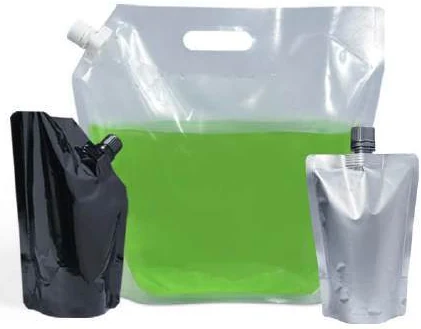
The catalogue includes flat-bottom pouches and spout pouches. These examples show different physical constructions; they are not interchangeable specifications. A box-style base gives the filled pack a distinct footprint, with separate front, back and side panels. Compare a plain top opening with a regular zipper, and use filled samples to decide the shelf depth and panel proportions.
| Format reference | Material or construction to clarify | Details to include in the brief |
|---|---|---|
| Flat-bottom pouches | Flexible laminate with paper-look or opaque outer options; the appearance alone does not identify the full layer structure. | Base width and full opened depth; net fill and product bulk. |
| Spout pouches | Flexible liquid-pack laminate with a fitted spout and cap; contact-layer and closure compatibility are reviewed for the formulation. | Fill volume and product viscosity; spout bore, position and cap. |
Use the reference pictures to identify the base, side panels, window or opening that you mean. A picture cannot supply the missing dimensions or material layers. If a photograph shows a finish or closure you do not want, state that difference explicitly; otherwise a visual reference can introduce an unintended requirement.
Complete the record before requesting the next sample
- Attach written clarification before confirming the order. Identify the product or SKU and the date of the observation.
- Record the quoted scope and outstanding cost items. Keep confirmed information separate from proposed values and questions for the supplier.
- Add the actual fill weight or volume, the dimension convention, material proposal and intended closure. Include the number of designs and quantity per design when requesting a quotation.
- State which question the next drawing, sample or quotation must resolve. A change of size, closure or material should remain visible alongside the earlier reference.
This record makes the next conversation specific. It lets the design, purchasing and packing teams work from the same proposed item and shows which decision still needs evidence. Review the related product pages for format details, or prepare a custom packaging brief with the unresolved requirements.

Put the decision into practice
1. Map the milestones. Translate the proposed payment schedule into deliverables and required approvals.
2. Clarify unresolved terms. Ask authorised commercial owners to resolve amounts, documents and change treatment.
3. Use established verification. Follow the buyer organisation process for payment instructions and internal authorisation.
4. Retain accepted terms. Store the agreed schedule with the order references and update it after accepted scope changes.
Ask Navkar Poly Print to explain proposed payment milestones against the actual sample, preparation and bulk-order deliverables in your quotation.
Sources and scope.
These references support the technical discussion. Product photographs illustrate formats; the material, dimensions and suitability of the proposed pack are confirmed for each project.
- BOBST: flexible packaging processing
Equipment manufacturer identifies distinct printing and converting processes; no Navkar machinery or commercial limits implied.
- ICC Digital Library: Incoterms questions and answers
Standards owner explains allocation of selected transport costs and risks. Exact agreed contract still controls other commercial terms.
- Nestlé Health Science: Purchase Order Terms and Conditions
Buyer-specific example separately addresses scope/hierarchy, quantities, delivery, payment, quality and documents. Its contractual terms are not universal rights or Navkar terms.
Let’s discuss your product.
Share your contents, dimensions, filling method, quantity and delivery destination. We’ll work through the proposed packaging specification with you.
Create a packaging brief