Pilot packaging orders across multiple filling lines should test a defined production and receiving arrangement, with acceptance decisions recorded separately for each affected operation. A promising development sample is a reason to plan the pilot, not evidence that every line and order condition is approved. Keep the supplier's pilot production record connected to the customer's line observations.
Define the question that the pilot must answer
State whether the pilot is assessing a new supplier, revised pack, production consistency, a second filling line or another defined change. Identify the approved baseline and the exact proposal being assessed. Avoid an open-ended request to try the packaging without acceptance responsibilities.
Agree the packaging items, artwork revisions, intended quantities and receiving locations. The technical owners should decide the observations and evidence needed for the application. Do not replace their protocol with general machine settings or an assumed test from an unrelated product category.
Create three linked records
The supplier record identifies what was made and submitted. The line record identifies what was received, filled or handled and under which documented conditions. The release record identifies who accepted the result and the scope in which the pack may be ordered.
| Record | Minimum useful content | Decision supported |
|---|---|---|
| Supplier pilot submission | Packaging item, specification, artwork and lot references | Whether the received material matches the proposed pilot |
| Filling-line observations | Actual sample identity, line and agreed observations | Whether the defined local interface has supporting evidence |
| Production release | Accepted scope, conditions and responsible owner | Whether the pack can proceed for the identified application |
Keep these references together. A pilot order acknowledgement is a commercial record; it is not the filling team's acceptance. Similarly, one positive line observation does not automatically release the same pack for all other lines.
Identify shared and line-specific evidence
Use the common specification to identify what can be reviewed across the programme. Record reel configuration, feeding presentation, filling access or final closure differences in line-specific annexes where needed. Ask the technical team whether a difference changes the supplied packaging or only the local operation.
If an issue occurs, preserve the material identity and record the observation before assigning a cause. A joint review may need information from the supplier, machine owner and product team. Do not treat an unexplained symptom as proof that every lot or format is unsuitable.
Define a pilot question for each affected line
Start with the accepted baseline and the change being considered. Identify whether the question concerns a new supplier, construction, line interface or another scoped requirement. Ask the technical owners to define the observations and acceptance before material is made or sent. A pilot that simply tries the pack can produce many comments without a clear route to a release decision.
Create a line list showing plant, equipment reference, product, supplied packaging configuration and responsible owner. Record common and local questions separately. Shared artwork or nominal dimensions do not establish that all lines present the same interface. The programme needs to identify which evidence can be considered common and which local decision remains necessary. The competent owners determine applicability rather than procurement assuming equivalence.
Make the supplier submission identifiable
Record the pilot item, drawing, construction, components, artwork, production stage and lot as relevant. Ask the supplier to identify differences from the intended commercial supply. If the submission changes during development, give it another reference. Observations from several candidates should not accumulate under one pilot name. The material record must let reviewers determine what was actually received and assessed.
Connect the submission to the dispatch and kit records where material goes to several sites. Those records establish allocation, custody and document handover. The pilot record establishes the agreed technical questions and evidence. Keep the tasks linked but distinct. A complete kit acknowledgement is not a completed line evaluation, and a courier delivery status does not show which sample was used at the machine.
Plan the observation record before work starts
Have each line owner define the relevant conditions, procedure references, observations and sample identification under the authorised protocol. Do not copy operating settings or test limits from another application. Record the conditions actually used and any departure from the plan. An observed result without its sample and process context may be difficult to interpret for the intended decision.
Identify who records findings, who interprets them and who can authorise the next step. A line observation can be factual while its cause remains unresolved. Preserve photographs and relevant records before changing several variables. The technical team may need supplier, equipment and product information to assess a finding. Avoid treating a symptom as proof that the complete lot or format is unsuitable.
Separate pilot quantities from future commitments
State the pilot's commercial deliverable and the treatment of remaining material under the accepted agreement. Identify what work is authorised and what requires another decision. A pilot order can pay for identified production and samples without releasing an unrestricted bulk programme. Keep payment, order acceptance and technical release as separate references where the buyer's process requires them.
If another pilot candidate is proposed, obtain revised scope and references before proceeding. Ask which earlier findings remain relevant and why. Do not repeat every activity automatically or carry every result forward automatically. The useful decision focuses new evidence on the changed questions while preserving the history of what has already been assessed within its actual limits.
Work through a split line outcome
In the illustrative programme, A completes its review and B postpones after an equipment change. Record A's accepted scope and B's pending state separately. Ask B's owner to identify what changed and whether the supplied packaging proposal needs revision. A's result can remain useful for its own scope without becoming programme-wide approval. The business should see both progress and the unresolved local requirement.
If B needs a different reel configuration, issue the appropriate candidate or annex reference and define affected evidence. Keep its observations separate from those for the earlier configuration. The supplier's original pilot lot remains in the history. The next review should identify the actual proposal being assessed, rather than attach a new drawing to old observations and imply a continuous accepted result.
Write the release decision at the right granularity
State item, specification, artwork, product, plant or line and applicable conditions as required by the decision. Record accepted within scope, additional evidence required or another authorised outcome. Identify the evidence and reviewer authority. A statement that packaging was tested is insufficient because it does not explain what question was addressed or where the result applies.
Procurement can then use the accepted scope in a commercial enquiry or order without assuming every site has progressed equally. The business may consider a staged introduction, but that requires its own authorised decision and supplier confirmation. Do not infer permission from the fact that one line has a positive observation. Keep existing stock and open orders linked to the accepted transition references.
Retain a pilot history useful for the next change
Keep supplier submission, actual line records, deviations, evidence interpretation and release decision together. Identify what remains open and the next owner. At a later supplier, product or line change, compare the new requirement with this history before reusing conclusions. A useful multi-line pilot produces scoped evidence and an executable next decision, while the separate kit-dispatch record continues to explain where material and documents travelled.
An illustrative pilot release
Consider a business piloting the same artwork family at two filling lines. The supplier has produced the identified pilot lot. Line A has completed the agreed review; Line B has postponed its review after an equipment change. The release record should identify A's accepted scope and B's outstanding decision.
Procurement should not describe the whole programme as approved merely because the pilot order was delivered. It can request the missing review for B and keep the records separated. If B needs a revised reel configuration, identify the new proposal before repeating the affected checks. This example is an approval model, not evidence of a completed customer pilot.
Multi-line pilot: a practical specification example
A procurement team is moving from a trial order to a repeat programme. Give the packaging a stable item identity that links drawing, material, artwork, closure and quantity unit. Keep plant-specific handling or delivery needs beside that shared item definition. The same product name can otherwise conceal different dimensions or artwork revisions when several people place orders.
For this decision, start with the packaging identity and each intended packing route. The useful output is separate observations instead of one assumed universal approval. Put that output beside the relevant quotation, drawing or sample rather than leaving it in a separate email. This is an illustrative decision exercise, not a report of a completed customer trial.
Product references to make the discussion concrete
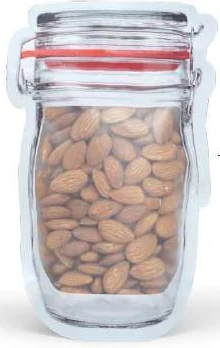
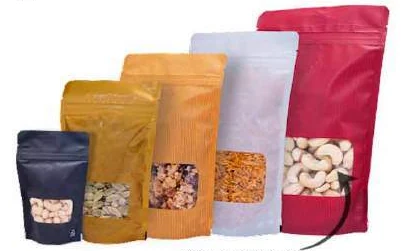
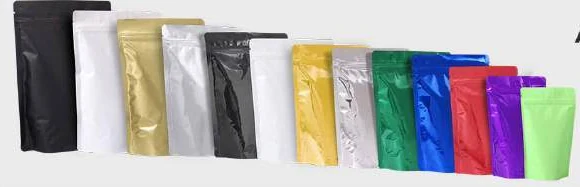
The catalogue includes flat-bottom pouches and courier bags. These examples show different physical constructions; they are not interchangeable specifications. A box-style base gives the filled pack a distinct footprint, with separate front, back and side panels. Compare a plain top opening with a regular zipper, and use filled samples to decide the shelf depth and panel proportions.
| Format reference | Material or construction to clarify | Details to include in the brief |
|---|---|---|
| Flat-bottom pouches | Flexible laminate with paper-look or opaque outer options; the appearance alone does not identify the full layer structure. | Base width and full opened depth; net fill and product bulk. |
| Courier bags | Flexible mailing-bag film with an adhesive flap; polymer type, opacity and thickness are project specifications. | Item or inner-carton dimensions; usable height excluding the flap. |
Use the reference pictures to identify the base, side panels, window or opening that you mean. A picture cannot supply the missing dimensions or material layers. If a photograph shows a finish or closure you do not want, state that difference explicitly; otherwise a visual reference can introduce an unintended requirement.
Complete the record before requesting the next sample
- Attach separate observations instead of one assumed universal approval. Identify the product or SKU and the date of the observation.
- Record the packaging identity and each intended packing route. Keep confirmed information separate from proposed values and questions for the supplier.
- Add the actual fill weight or volume, the dimension convention, material proposal and intended closure. Include the number of designs and quantity per design when requesting a quotation.
- State which question the next drawing, sample or quotation must resolve. A change of size, closure or material should remain visible alongside the earlier reference.
This record makes the next conversation specific. It lets the design, purchasing and packing teams work from the same proposed item and shows which decision still needs evidence. Review the related product pages for format details, or prepare a custom packaging brief with the unresolved requirements.
Plan commercial dependencies alongside the trial
Confirm what happens to the pilot quantity, remaining samples and any material proposed for further production. Keep commercial order acceptance, technical release and the next requested delivery distinct. Ask the supplier to identify the assumptions behind any proposed schedule.
Where a pilot changes the active specification, define how it affects existing stock and open orders. The buyer should decide which accepted revision belongs to each future order rather than relying on the most recent email attachment.
General converting context is available from BOBST. Nestle's vendor quality document illustrates buyer-specific vendor controls; use the applicable customer's actual requirements.
Send the pilot objective, current baseline, proposed pack, filling-line list, sample identity requirements and acceptance owners with the request. The useful pilot outcome is a defined release decision with evidence and remaining conditions, not a broad statement that the packaging has been tested.
Sources and scope.
These references support the technical discussion. Product photographs illustrate formats; the material, dimensions and suitability of the proposed pack are confirmed for each project.
- BOBST flexible packaging
General printing and converting process background; not proof of Navkar installed equipment.
- Nestle quality requirements for vendors of raw and packaging materials
Buyer-specific reference for controlled material and vendor quality requirements; readers must use their own customer specification.
Let’s discuss your product.
Share your contents, dimensions, filling method, quantity and delivery destination. We’ll work through the proposed packaging specification with you.
Create a packaging brief