
Define the colour target and review basis before asking a supplier to match your packaging. A screen image, a paper swatch and a finished pouch can represent different viewing conditions and materials. The useful question is which identified reference the team will accept for the actual proposed pack. Record that agreement so colour approval remains understandable during production and repeat orders.
Choose a controlled target
Record the source of the target: an agreed standard reference, accepted physical print or another identified colour specification. Ask the print specialist what can represent the proposed substrate and process. A photograph of old packaging can help communicate intent, but its capture and display conditions make it a limited reference. Do not promote it into an exact colour requirement without agreement. Identify which brand areas are critical and whether several SKUs need a common visual relationship, so the review addresses the actual programme rather than one isolated patch.
Include the viewing construction
Record material, viewing face and finish alongside the target. Ask whether the proof represents the final arrangement or an intermediate stage. If a clear or metallic-looking surface contributes to the appearance, make that part of the review scope. Avoid assuming that a numerical colour code by itself resolves all differences between materials. Where measurement is proposed, the qualified parties should agree the method, conditions and acceptance basis. A buyer should not insert an arbitrary colour-difference threshold merely because a generic guide mentions one.
Preserve the accepted reference
Identify the approved proof or physical reference, its scope and its relationship to the production specification. Record who accepted it and any limitations. If the final finish or construction changes, ask whether the reference still applies. For a repeat run, compare against the accepted baseline through the agreed process rather than a recently photographed pack or a sample whose storage history is unknown. Colour discussions become more useful when all parties can retrieve the same reference and understand the review conditions behind the decision.
Create a colour-target agreement
The agreement below connects a visible target with the actual package and decision process. It is not a colour-measurement procedure or a promise that any screen view can reproduce final print.
| Record | What to capture and how to use it |
|---|---|
| Target identity | Record the standard, swatch or physical-print reference and its status. Identify critical brand areas and any relationship across SKUs, making the expected visual objective more precise than a request to match the attached photograph. |
| Viewing construction | Record substrate, viewing face and finish for the proposed pack. State whether the evidence represents that final arrangement or an intermediate stage so appearance approval is not transferred beyond the sample's actual scope. |
| Review conditions | Ask the responsible print and brand owners to agree visual or measurement conditions and the acceptance basis. Keep their reference in the record instead of treating ordinary monitor display or office lighting as a universal proofing environment. |
| Accepted reference | Identify the approved proof or specimen and the subjects it covers. Record the decision owner, revision and limitations, then preserve a retrievable baseline for production review and future orders. |
| Change trigger | List the construction, finish or artwork changes that need a fresh applicability review. Record which evidence remains valid and what must be repeated, avoiding automatic transfer of a colour decision to an altered viewing system. |
Provide the agreement early enough for suppliers to identify constraints before production. Clear target ownership is more helpful than demanding an undefined perfect match after several teams have reviewed different examples.
Illustrative screen-to-pack disagreement
A brand manager judges a proposed green against an image displayed on a laptop, while the printer refers to an earlier accepted physical sample. The team first reconciles the intended target and actual proposed substrate. It then agrees the appropriate review reference and conditions. The example supplies no measured difference and declares no party at fault; it demonstrates that a colour disagreement can begin with an unagreed baseline rather than a proven printing defect.
Esko places colour management within prepress. BOBST provides a specific flexo equipment reference.
Identify the target and what it controls
A colour name can refer to a brand intention, an ink reference, a digital value or a physical sample. State which reference is authoritative for the current decision. If several references are supplied, explain their relationship. A screen image and an older printed pack may differ because they represent different systems, substrates or conditions.
Ask the printer to confirm how the target will be interpreted on the proposed construction. If a supplied sample is faded, damaged or otherwise unsuitable as a stable reference, record the issue rather than pretending it is precise. The brand and printer should agree a usable reference before asking a reviewer to approve a match.
Control the viewing construction
Record the substrate, backing, print location and finish represented by the reference. Where a clear region is involved, include the relevant background or product condition. The observed colour is part of that viewing system. A swatch seen against a white desk can look different from a printed clear panel over the intended contents.
Glenroy's graphics guidance notes substrate tint as a colour-matching consideration. This supports describing the construction rather than approving an isolated screen value. It does not define another printer's matching method. Ask the current supplier which proof or sample represents the final viewing arrangement and which differences remain.
Agree how the comparison will be made
Identify the exact area being judged, especially on a design containing several similar shades. A circle or annotated image can prevent one reviewer comparing the brand panel while another comments on a photograph. Keep the unmarked reference as well, so the annotation does not alter the colour area under review.
Specify the comparison references and the review condition appropriate to the project. Where instrumental data is part of the agreed method, identify the method, settings and acceptance basis through the qualified parties. A number without those references can create false precision. This guide does not set a universal colour difference limit.
For visual review, avoid changing lighting or background between alternatives without recording it. Place references in a consistent orientation and compare the relevant area rather than relying on memory. If different observers disagree, retain their observations and ask the responsible owner to resolve the target or assessment method. Majority preference is not automatically the same as conformance to an agreed colour reference.
Separate proof content from colour acceptance
A proof can confirm text and placement while offering only an approximation of final colour. Record that scope explicitly. Do not label a content approval as an exact colour approval if the proof process cannot support it. Conversely, a physical colour reference does not establish that the final artwork wording and variant data are correct.
Consider an illustrative design with a critical brand panel and a product photograph. The team may need different reference logic for the brand colour and the image appearance. Ask the printer to explain the proposed reproduction and approval route for each. Keep the agreed decision simple enough that a reviewer can identify what is being compared and what constitutes acceptance.
Preserve a reference that remains meaningful
Link the accepted sample or proof to the item, artwork and construction revisions. Store physical references through the organisation's appropriate procedure, retaining their identity and condition. A later comparison becomes unreliable if the reference is unlabelled or visibly changed. Record when a new accepted reference supersedes an older one and why.
If a construction, finish or print route changes, ask whether the existing colour reference remains applicable. A brand target may remain the intention while the method of representing it needs review. Document the revised agreement before production. The result should make the buyer's expectation and the printer's acceptance basis clear, without a universal matching promise or an unsupported claim that every repeat order will appear identical under every viewing condition.
Colour approval: a practical specification example
A designer is preparing a pouch face before the final closure layout is fixed. Ask for a dimensioned dieline and distinguish the finished trim, sealed areas, folds and visible panel. Place essential information inside the usable artwork area. A flat-bottom pack also needs side and base-panel orientation to be reviewed; a good-looking front panel does not approve the complete artwork set.
For this decision, start with the colour references and printed substrate. The useful output is an agreed comparison method with the actual material appearance. Put that output beside the relevant quotation, drawing or sample rather than leaving it in a separate email. This is an illustrative decision exercise, not a report of a completed customer trial.
Product references to make the discussion concrete
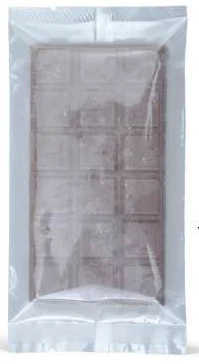
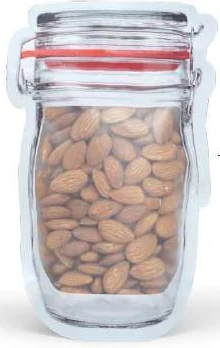
The catalogue includes flat-bottom pouches and jar-shaped zipper pouches. These examples show different physical constructions; they are not interchangeable specifications. A box-style base gives the filled pack a distinct footprint, with separate front, back and side panels. Compare a plain top opening with a regular zipper, and use filled samples to decide the shelf depth and panel proportions.
| Format reference | Material or construction to clarify | Details to include in the brief |
|---|---|---|
| Flat-bottom pouches | Flexible laminate with paper-look or opaque outer options; the appearance alone does not identify the full layer structure. | Base width and full opened depth; net fill and product bulk. |
| Jar-shaped zipper pouches | Clear or frosted flexible pouch construction with a zipper; the jar shape is a profile, not a rigid container. | Usable cavity and narrowest opening; die-cut outline and corner radii. |
Use the reference pictures to identify the base, side panels, window or opening that you mean. A picture cannot supply the missing dimensions or material layers. If a photograph shows a finish or closure you do not want, state that difference explicitly; otherwise a visual reference can introduce an unintended requirement.
Complete the record before requesting the next sample
- Attach an agreed comparison method with the actual material appearance. Identify the product or SKU and the date of the observation.
- Record the colour references and printed substrate. Keep confirmed information separate from proposed values and questions for the supplier.
- Add the actual fill weight or volume, the dimension convention, material proposal and intended closure. Include the number of designs and quantity per design when requesting a quotation.
- State which question the next drawing, sample or quotation must resolve. A change of size, closure or material should remain visible alongside the earlier reference.
This record makes the next conversation specific. It lets the design, purchasing and packing teams work from the same proposed item and shows which decision still needs evidence. Review the related product pages for format details, or prepare a custom packaging brief with the unresolved requirements.
Approve a reproducible appearance decision
Issue the accepted agreement with the artwork and construction references. Ask for proposed deviations or changes before manufacturing. Use the same target during repeat-order discussions and revise it deliberately when the brand changes direction. This turns colour matching from an informal expectation into a reviewable part of the packaging specification.
Send the completed colour-target agreement with your product and filling details to Navkar Poly Print for a project-specific discussion. Ask for the proposed specification, evidence required and open questions to be recorded before quotation approval.
Sources and scope.
These references support the technical discussion. Product photographs illustrate formats; the material, dimensions and suitability of the proposed pack are confirmed for each project.
- Esko packaging prepress process
Primary prepress-software supplier reference; buyer worksheets are original editorial tools.
- BOBST EXPERT CI flexo press
Current equipment-manufacturer process reference. Narrow contextual citation only; no Navkar machinery or performance inference.
- Graphics Specifications
Discusses proof scope, substrate tint and positive/reversed fine-detail differences. Scope: Supplier-specific flexographic guidance; numeric limits and proof claims not transferred to another printer.
Let’s discuss your product.
Share your contents, dimensions, filling method, quantity and delivery destination. We’ll work through the proposed packaging specification with you.
Create a packaging brief