Locate and describe a seal complaint before naming its cause. Record the specimen, exact joint, observation stage and relevant product-package references. A photograph showing an opening or wrinkle can support investigation but may not identify why it occurred. Use an evidence packet that lets the supplier and filling team review the same event, with technical disposition and corrective action left to the responsible qualified process.
Preserve the actual event
Follow the site’s approved process for retaining or referring the material and recording its status. Identify whether the concern was observed before filling, after closing, during storage or after transport. Record the package orientation and seal number from the drawing. Avoid modifying the specimen outside authorised procedures to demonstrate the issue. The buyer should request clear evidence and identity, not improvise a test that changes the sample and makes later interpretation harder. Preserve original observations even after a likely explanation is proposed.
Build a joint evidence view
Link construction, pouch or reel batch, product, final closure route and relevant site records. Ask each party for the information within its responsibility. Keep converter-completed joints and final filling closure locations distinct without assuming either is at fault. ASTM F1886/F1886M addresses visual inspection; ASTM F2096 addresses a gross-leak method. Qualified reviewers should choose suitable methods and interpret their scope rather than treating a complaint photograph as a completed technical conclusion.

Test the explanation against evidence
List proposed causes as hypotheses until supported. Ask what observation would distinguish them and which qualified party will obtain it. Record the agreed action and verification outcome. A material change, geometry change or line action should be linked to the supported finding and accepted scope. Do not close the record merely because the next few samples look better under undocumented changes. If the cause remains unresolved, record the next useful evidence and any authorised interim decision rather than manufacture certainty.
Use a seal-event evidence packet
The packet gives every reviewer a common starting point and preserves the difference between an event, its interpretation and the final decision.
| Record | What to capture and how to use it |
|---|---|
| Event location | Record the seal number, orientation and observation stage. Link an identified drawing and specimen so the same physical concern can be located without guessing from a cropped photograph or an ambiguous phrase such as bottom leak. |
| Specimen identity | Record product, package construction and material or pouch references. Link the relevant supplier and site records, preserving the identity needed to distinguish one specimen or batch from visually similar material. |
| Observed evidence | Describe the actual condition and retain supporting records through the approved process. Keep symptoms separate from suspected causes and note any specimen handling or investigation step that affects later interpretation. |
| Hypothesis and assessment | Record possible explanations, discriminating evidence and responsible reviewers. Let qualified teams select methods and disposition, keeping method limits visible rather than claiming one test proves every aspect of integrity. |
| Action and verification | Record supported findings, agreed change and verification result with scope. Preserve unresolved questions and authorised interim decisions, then update controlled references only when the evidence and approval support the revision. |
Use the packet in supplier discussion before debating remedies. A complete location and identity record makes it easier to request the correct evidence and reduces the risk of several teams investigating different samples.
Illustrative transport-stage complaint
A pouch is reported open after delivery to a distribution point. The first report does not establish whether the issue concerns a converter joint, final filling closure or later damage. The buyer records the exact location and specimen identity and requests the relevant packing and handling evidence through responsible teams. The example names no cause and recommends no universal test. It shows why the observation stage and joint map are essential before the project assigns corrective action.
Preserve the specimen's context
Record who observed the concern, when it was found and the condition in which the pack arrived. Identify product, quantity, package item and relevant batch or reel reference where available. Keep the complete specimen image as well as a close-up. A cropped seam photograph can lose orientation and hide whether the feature lies at a fold or intersection.
If information is missing, state the gap rather than reconstructing it from a similar pack. A returned consumer specimen and a retained line specimen can provide different context. The investigation should identify what each can support. Do not call a specimen representative of the whole order without an appropriate selection basis.
Locate the symptom on the seal map
Mark the region against the current drawing and describe what is visible. Separate a wrinkle, an apparent opening, residue or another observed feature from the proposed cause. The location can guide the next assessment. A straight region, corner and layer transition may require different attention under the actual package geometry.
Ilhan and colleagues' study used cross-section imaging to examine critical regions in one defined multilayer film. Its geometry-dependent findings support locating the symptom precisely. They do not diagnose a returned Navkar pack or justify copying experimental sealing settings into an unrelated process.
State the requirement that may be affected
Ask which intended function the observation calls into question. Appearance, opening, strength and leakage are different subjects. The technical owner should choose the relevant assessment and acceptance reference. A complaint description can initiate investigation without proving that every requirement failed.
Keep test and specimen identities linked if evidence is collected. Record the location examined and any preparation that changes the sample. A destructive assessment may prevent another observation on the same specimen, so the qualified team should plan the sequence. Procurement can coordinate the evidence request without improvising the laboratory method.
Compare hypotheses with discriminating evidence
List plausible explanations offered by the relevant owners and the evidence that would distinguish them. Product near the final closing region, a geometry transition and a process event can be different avenues. The investigation should not begin with a conclusion that the material or operator is at fault merely because that explanation is convenient.
For an illustrative wrinkle found near a gusset, ask whether the feature appears in retained samples from the same condition and where it occurs. Record the comparison basis. A similar-looking wrinkle elsewhere may have a different context. The purpose is to narrow the question through evidence, not to produce a long list of speculative causes.
Define the affected scope carefully
Identify whether the comparison specimens came from the same production condition or another reference source. That difference can matter to interpretation even when the packages share the same artwork.
If several specimens are assessed, state how they were selected and which populations they represent. A deliberately selected complaint sample is not a random production sample. A small set of retained specimens can answer a local question without estimating the whole-order defect rate. Preserve this distinction in the technical summary.
Where the investigation identifies a narrower affected segment, retain the records supporting that boundary. If the evidence cannot establish a boundary, say so. Do not let commercial pressure create a false numerical scope. The disposition decision belongs to the authorised owners using the actual evidence and organisation's procedure.
Verify the action against the original concern
Record what action was accepted, which hypothesis it addresses and how the original symptom was reassessed. If the concern involved a particular region or transition, include it in the verification plan. A later neat sample from another region cannot close the same question by itself.
The final complaint record should distinguish observation, technical interpretation, affected scope, action and evidence of verification. It can acknowledge an unresolved question without inventing a cause. This gives procurement and B2B reviewers a clear account of the decision while keeping scientific and operational judgement with the relevant technical owners. It also creates a useful reference if a similar symptom appears under a different condition later.
Seal-strength and leak tests: a practical specification example
A pouch closes neatly when empty but behaves differently once product reaches the seal area. Use a representative fill and distinguish the factory-made seals, the final closing seal and any reclosure. The useful record shows where the problem appeared and what product or handling condition was present. Do not change several variables at once and then attribute the result to one feature.
For this decision, start with the question each test must answer. The useful output is separate test observations instead of treating one result as another. Put that output beside the relevant quotation, drawing or sample rather than leaving it in a separate email. This is an illustrative decision exercise, not a report of a completed customer trial.
Product references to make the discussion concrete
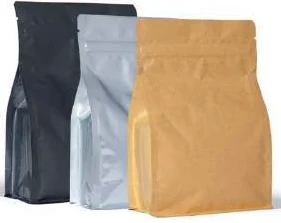
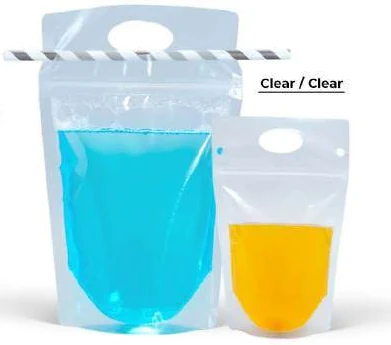
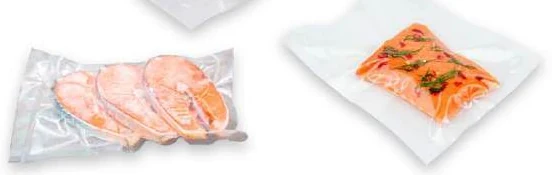
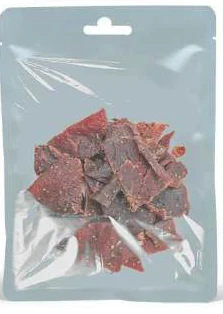
The catalogue includes dried-food and pet-treat pouches and vacuum packaging bags. These examples show different physical constructions; they are not interchangeable specifications. A clear face can show the contents, while an opaque panel leaves space for the artwork. Discuss zipper and no-zipper versions according to portion size and use after opening. The food or treat formulation, surface oils and intended storage conditions determine the material brief.
| Format reference | Material or construction to clarify | Details to include in the brief |
|---|---|---|
| Dried-food and pet-treat pouches | Clear-front or opaque flexible laminate with a product-specific contact layer; barrier and seal requirements are confirmed separately. | Product texture, oils and portion size; use after first opening. |
| Vacuum packaging bags | Clear or opaque flexible vacuum-bag construction; layer structure, thickness and surface requirements are confirmed for the packing method. | Product shape, edges and fill weight; usable opening and final seal band. |
Use the reference pictures to identify the base, side panels, window or opening that you mean. A picture cannot supply the missing dimensions or material layers. If a photograph shows a finish or closure you do not want, state that difference explicitly; otherwise a visual reference can introduce an unintended requirement.
Complete the record before requesting the next sample
- Attach separate test observations instead of treating one result as another. Identify the product or SKU and the date of the observation.
- Record the question each test must answer. Keep confirmed information separate from proposed values and questions for the supplier.
- Add the actual fill weight or volume, the dimension convention, material proposal and intended closure. Include the number of designs and quantity per design when requesting a quotation.
- State which question the next drawing, sample or quotation must resolve. A change of size, closure or material should remain visible alongside the earlier reference.
This record makes the next conversation specific. It lets the design, purchasing and packing teams work from the same proposed item and shows which decision still needs evidence. Review the related product pages for format details, or prepare a custom packaging brief with the unresolved requirements.
Close with a supported decision
Issue a short finding and verification record linked to the evidence packet. State the affected material, conditions and remaining limits. Use the learning to update the appropriate specification or handover when justified. If evidence is incomplete, keep the status and next owner explicit. This gives procurement a credible complaint record without turning a symptom into an unsupported diagnosis.
Send the completed seal-event evidence packet with your product and filling details to Navkar Poly Print for a project-specific discussion. Ask for the proposed specification, evidence required and open questions to be recorded before quotation approval.
Sources and scope.
These references support the technical discussion. Product photographs illustrate formats; the material, dimensions and suitability of the proposed pack are confirmed for each project.
- ASTM F1886/F1886M visual inspection of flexible seals
Method scope for visual seal inspection; method selection and acceptance criteria require qualified review.
- ASTM F2096 gross leak testing
Standards-owner gross-leak method scope; no universal leak-free or application-suitability claim.
- Observing the effect of pressure and temperature on the seal integrity of critical seal regions of various flexible bag designs
Specific multilayer cross-section study supports precise region identification; not diagnosis of a company complaint.
Let’s discuss your product.
Share your contents, dimensions, filling method, quantity and delivery destination. We’ll work through the proposed packaging specification with you.
Create a packaging brief