Packaging bags for Pollachi coconut and coir businesses should be divided into food and industrial requirements at the start. Dried coconut for retail, an oil-related packaging requirement and a coir product for bulk handling are different jobs. The contents, filled shape, closing method and storage conditions should control the proposed pack.
Four Pollachi product briefs in one place
The Pollachi coconut and coir hub separates food packaging from industrial coir packs while keeping both easy to find. The product, its prepared condition and the way it is handled determine which brief to use.
| Product group | What to establish first | Continue with the relevant brief |
|---|---|---|
| Dried coconut foods | Cut size, fill weight, loose volume and intended opening | Dried-coconut pouches |
| Coconut oil | Fill volume, filling temperature, closure and leakage review | Coconut-oil packs |
| Compressed cocopeat blocks | Block dimensions after compression, edge protection and label area | Coir block wraps |
| Loose coir or bulk cocopeat | Settled volume, compression, closure and dispatch handling | Bulk coir sacks and liners |
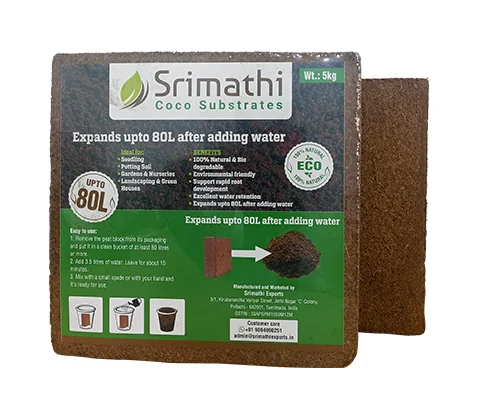
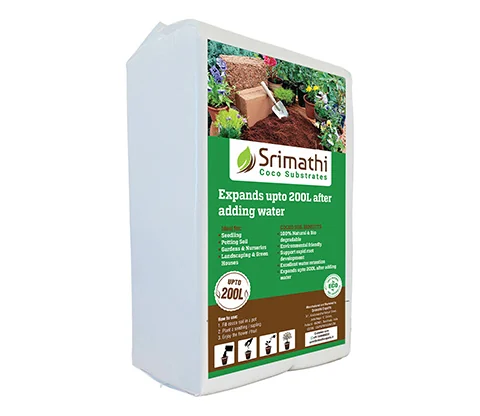
The coir photographs are published product references from Srimathi Exports in Pollachi. They show a labelled block, a wrapped block and a packed bale, making the difference between a product wrap and a bulk outer easier to discuss. The pictured supplier's pack sizes, marks and performance statements are not specifications for a Navkar order. Record your own prepared product dimensions, filling method and destination handling conditions in the enquiry.
Food-contact suitability belongs in the separate dried-coconut or oil brief. Do not carry a coir material choice into a food application simply because both products originate from coconut businesses. Each product group in the hub has its own material, artwork, handling and sample-review questions.
Pollachi: the industry and buying context
Tamil Nadu Agricultural University’s Coimbatore district plan discusses coconut-related and coir industries around Pollachi. That regional connection is useful for choosing the audience, but a dried-food pack and an industrial coir sack need separate material and handling briefs.
Regional industry reference. The packaging requirements below are practical buying guidance; product images illustrate applications and formats.
Keep coconut-food and coir enquiries separate
State the exact product and its intended use before asking for a material. A retail dried-coconut pouch is a product-contact food-pack requirement. A coir or related industrial product has a different bulk, handling and identification brief. One shared regional supply chain does not make the packaging interchangeable.
If the business sells several coconut-derived products, list them separately with their form and target quantity. Pieces, flakes, powder and liquids need different opening and filling discussions. Identify which items are already filled in another primary container and which require the proposed bag to contain the product directly.
For coir-related products, describe the product as it will be packed: loose, compressed, shaped or bundled. Include the dimensions after preparation for dispatch. The package should be sized around that state, not around an unpacked photograph.
Develop a retail dried-coconut pouch brief
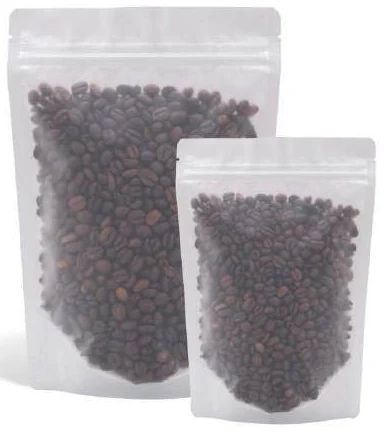
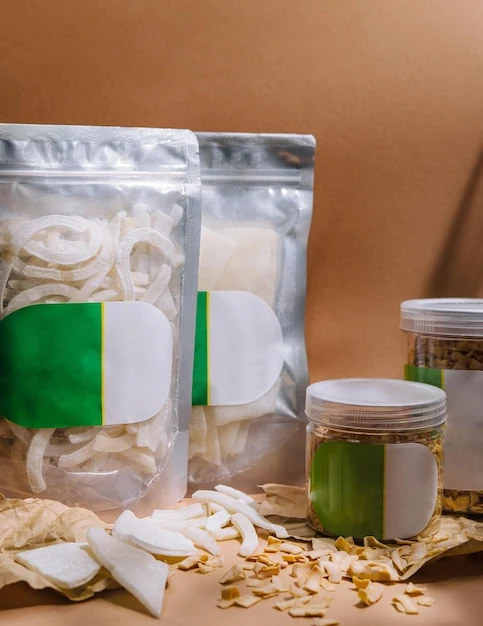
Choose a candidate pouch shape and compare it with the actual dried product at the intended fill. A clear front can show the contents; an opaque or paper-look surface creates a different visual presentation. Keep the desired viewing area separate from the complete material construction.
For repeated-use products, discuss a zipper and the space needed for the final top seal. Check access and reclosure after a portion has been removed. For a single-use format, begin with the opening and dispensing action rather than adding every possible closure feature.
Ask for the proposed layer structure and thickness in writing, using the product-contact and storage requirements in your brief. The appearance of a photographed pouch does not identify those layers or establish shelf life. Keep any required performance evidence tied to the actual proposed pack.
Packaging formats to discuss
Use the product pages to identify the format you mean, then attach the dimensions and application requirements. A sample photograph shows a reference construction; the written brief defines the proposed order.
| Format | Construction or purpose to clarify | Information to include |
|---|---|---|
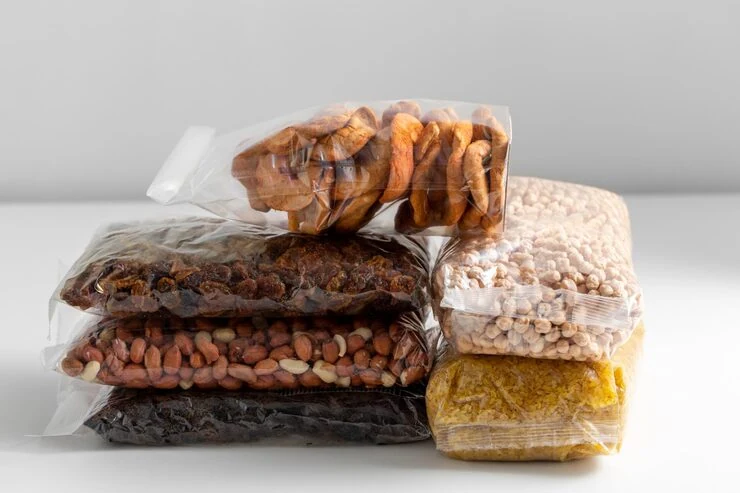
| Dried-food and pet-treat pouches | Clear-front or opaque flexible laminate with a product-specific contact layer; barrier and seal requirements are confirmed separately. | Product texture, oils and portion size; Use after first opening. |
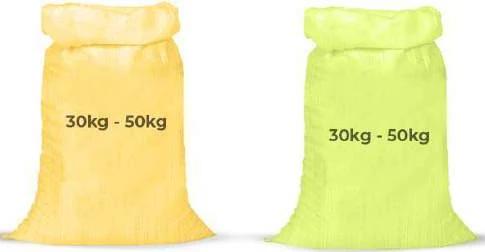
| Woven sacks | Woven outer sack with an application-specific closing brief | Fill, construction, dimensions and liner needs. |
| Industrial liners | Flexible liner sized to a container or outer pack | Contents, container dimensions, folds and closing allowance. |
For artwork, ask for the drawing for the actual selected format before releasing final files. Keep the approved material, dimensions, opening and print revision on the same item record. A later change to one of those fields should be checked against the rest of the specification.
Size an industrial sack or liner around the prepared product
For a woven sack, provide the intended fill and the external envelope of the product as packed. State how the sack is filled, moved, stacked and closed. If there is an inner liner, specify its role and how it is handled within the outer construction.
A compressed or shaped item can present different corners and contact areas from a loose fill. Show those areas on a drawing or sample so the technical review addresses the actual package. Do not infer a carrying or stacking capacity from a sack weight printed on an unrelated catalogue image.
Discuss any required liner dimensions against the real container or sack. Extra folds and closing allowance need a purpose; an oversized liner can create a different handling problem from one that is too small. Record the sample arrangement used to approve the fit.
Compare the cost of the complete packed item
Use the same product state and required output in each comparison. An empty sack, a liner and a printed retail pouch are separate quotation items. Keep quantities and units clear so a per-sack figure is not compared with a film or pouch figure for a different scope.
For dispatch, record the filled envelope, outer arrangement and item count. A change in compression, bundle size or retail presentation can alter the shipment volume even when the material purchase price is unchanged. Use measured dimensions for a freight enquiry.
For a multi-product order, separate the artwork quantities and delivery destinations. Confirm which items can be packed together for shipment and which need their own receiving identification. These details help the buyer understand the delivered order rather than a disconnected empty-pack price.
Control artwork and reorder references
Use distinct item names for food packs and industrial sacks. Record the contents, size, material proposal and artwork revision in the item record. Avoid reusing a short product name that leaves the receiving team to guess the intended use.
Review the printed information on the proposed surface and finished shape. A woven sack surface and a laminated pouch face offer different presentation conditions. Keep the desired print detail and readable fields visible in the quotation and proof review.
Provide the exact Pollachi delivery address, postcode and receiving requirements. For a repeat order, point to the approved construction and filled reference. Recheck the packaging when a product changes from loose to compressed or when the target retail fill is revised.
Questions for Pollachi packaging buyers
Can one supplier brief cover both dried coconut and coir?
One enquiry can contain multiple items, but each item needs its own contents, intended use, material requirements and dimensions. Separate the food-contact pack from the industrial packaging scope so the quotation remains unambiguous.
Should the pack be sized before the product is compressed or bundled?
Use the product in the state in which it enters the package and is dispatched. Record how that state was achieved and which dimensions were measured. A later change to the preparation or bundle can require a fit review.
What information is needed for delivery to Pollachi?
Provide the product-specific item table, quantity per design, proposed constructions and delivery postcode. Our Hyderabad team can review the packaging requirements and confirm the commercial and dispatch scope in a quotation.
Prepare your Pollachi packaging enquiry
Start a packaging brief for Pollachi. The form will carry the proposed product, preferred format and delivery region into your enquiry; add your exact postcode and requirements before reviewing the brief. Share the quantity per design, intended fill, available drawing and artwork status. Our contact team is based in Hyderabad and confirms the proposed specification, availability, freight and lead time for each enquiry.
For further reading, use the related technical guides below or browse the regional packaging guides to explore another industry context. The best next step is the drawing, sample or quotation that resolves your own product's remaining question.
Sources and scope.
These references support the technical discussion. Product photographs illustrate formats; the material, dimensions and suitability of the proposed pack are confirmed for each project.
- Tamil Nadu Agricultural University: Coimbatore district agriculture plan
Primary regional industry context. Does not establish a Navkar branch, local stock or product performance.
- Srimathi Exports, Pollachi — published packaging reference
Supports the pictured market or packaging example only. It does not establish Navkar authorship, a customer relationship, current specifications or material performance.
- Srimathi Exports, Pollachi — published packaging reference
Supports the pictured market or packaging example only. It does not establish Navkar authorship, a customer relationship, current specifications or material performance.
Discuss packaging for Pollachi.
Share your contents, dimensions, filling method, quantity and delivery destination. We’ll work through the proposed packaging specification with you.
Create a packaging brief