Review a seasoning blend as the actual finished mixture, with component balance and pack-interface observations kept separate. A pouch reaching target mass does not by itself establish that its contents represent the intended blend. Have the product owner define the composition assessment and follow the product through the packing route.
Define the mixture and its acceptance method
Record the blend reference, relevant particle forms and actual formulation information required for technical review. Share confidential detail through normal procurement arrangements. Ask the product owner how representative composition is assessed and what variation is acceptable; do not invent a universal threshold.
The ICPE spice chapter distinguishes ground spice applications. It does not validate a particular blended product or its mixing performance. The actual formulation and process evidence must control the enquiry.
Define composition separately from total mass
Identify which blend characteristic the product owner needs to assess. Total filled mass confirms one quantity, while component balance or another defined composition measure concerns what that quantity contains. The team needs the owner's actual method rather than a visual guess.
Record meaningful physical component groups and current finished-blend identity. Different particle forms may suggest useful observation points, but they do not prove segregation or another mechanism. Keep observations grounded in the actual material.
Agree the sample selection and preparation before the comparison. A sample taken from an accessible surface may answer a different question from the owner's representative method. Procurement should preserve the method reference so a reported difference can be interpreted.
An illustrative task statement could ask whether the defined blend assessment remains comparable between finished mixture and filled packs under the current route. That is more specific than asking whether the seasoning fills well. It also prevents a successful weight check from closing an unresolved composition question.
Choose informative stage observations
Possible observation points include the finished mixture before transfer, material entering the filler, the filled pouch and the product removed during normal use. Select stages relevant to the question and record their identities. Sampling technique itself can affect interpretation, so keep the product owner's method consistent.
FLtècnics distinguishes equipment routes for spice and seasoning applications. Confirm the actual route and technical owner before assigning a cause. A final-pouch observation cannot by itself identify whether a difference began during mixing, transfer, dosing or use.
Select boundaries that can locate a difference
Map the real sequence from mixing through transfer, dosing, filling and customer removal. Choose boundaries relevant to the current question, with the product and operating owners. A final-pouch result combines several earlier events and cannot locate the cause alone.
Keep assessment methods comparable across stages. Record actual sample position, timing or sequence identity and the basis on which groups are considered representative. If different methods are necessary, explain the limit rather than treating the outputs as directly interchangeable.
For an illustrative investigation, the finished blend and filler-entry samples may appear comparable under the defined method, while later pack samples differ. The next work can focus on the intervening operation. This narrows the question without proving that pouch geometry is responsible.
Record unobserved intervals honestly. If a transfer point cannot be sampled under the site's authorised procedure, mark it as unavailable and ask the responsible team to plan a suitable follow-up. Do not fill the gap by assuming the material remained unchanged.
Use a composition-path record
| Stage | Product observation | Pack-interface observation |
|---|---|---|
| Finished blend | Baseline under agreed method | Not yet a pouch result |
| Transfer | Any supported change from baseline | Entry to the filling route |
| Filling | Representative composition assessment | Mouth, walls and closing region |
| Complete pack | Defined product result | Shape, code and closure reference |
| Normal removal | Product delivered through the task | Pour, scoop and reclosure interaction |
This original record prevents every product variation from being labelled a packaging failure. It also keeps a good mass result from masking an unresolved product-composition question.
Interpret a composition record with its actual basis
State whether a result is a count, mass fraction, defined analytical measure or qualitative observation. Those bases answer different questions. Keep units and denominators beside every number so the apparent precision does not conceal an incompatible comparison.
An explicitly illustrative mass record contains 4 g of a defined visible component in a 20 g assessed portion before an operation, and 5 g in a separate 20 g portion afterwards. Those fractions are 20% and 25% by mass, a five-percentage-point difference. The invented values demonstrate arithmetic rather than a specification or finding.
Separate-sample differences require interpretation of sampling and method variation. They do not prove that the operation added one gram of the component. Ask the product owner what evidence is needed to judge the actual blend.
Retain raw observations and any excluded samples with reasons. Reporting only an average can conceal a sequence pattern. An unexplained rejected sample can also bias the apparent result and make later comparisons difficult to reconstruct.
Separate movement from closure concerns
Record visible powder or component contact near the marked closing region. Ask the technical owner to assess the consequence through appropriate evidence. A visible observation is not a measured leak result, and no generic machine setting should be prescribed from it.
If the product owner identifies an upstream composition issue, investigate through the responsible operation. Do not change pouch dimensions as the default response unless the actual evidence identifies a pack-interface question. Keep the original sample and stage record available for joint review.
Keep the pack interface and serving question distinct
Observe mouth access, wall contact and product near the closing region as a separate set of fields. A composition result does not establish closure integrity, and a closure assessment does not establish representative composition. The relevant owners need both where both matter.
For the customer task, state whether the whole pack is emptied or several portions are removed. Use the actual receiver or utensil and observe the complete opening. A repeated-use blend may need a defined assessment across removals if representative portions are part of the proposition.
An illustrative observation can show the filled pack meeting the product-owner assessment while the first poured portion looks different under the relevant method. That finding directs attention to the product-and-use sequence. It does not establish that industrial filling failed.
Record any instruction or agitation used in the demonstration. The product owner must decide whether such an action belongs in the intended proposition and how it should be assessed. Do not invent mixing instructions or a dosing claim to make the pouch appear suitable.
Review customer removal on the actual pack
Observe ordinary pouring or scooping from a complete sample. State whether the pack is single-use or repeated-use. If the blend is expected to provide representative portions through repeated removal, the product owner should define how that expectation is assessed.
For an illustrative finding, the filled pouch may meet the defined product assessment while ordinary direct pouring changes the visible component balance of a serving. That calls for a product-and-use review. It does not establish that the filling operation or material is defective.
Use the findings to assign the next decision
State whether the unresolved issue belongs to formulation, mixing, transfer, dosing, pack access or another identified area. More than one area can remain open. Procurement can coordinate the record without assigning a technical cause beyond the evidence.
Ask for a new pouch sample only when the record identifies a component question. A wider mouth may address access but cannot automatically correct an upstream blend difference. Keep the intended mechanism of each proposal visible.
At release, match blend identity, quantity, packing route, drawing, construction and artwork. Link the composition evidence and pack-interface evidence separately. Record the accountable approvals rather than an unqualified pass attached to the category seasoning blend.
If formulation, particle form or operating route changes, map the effect to those evidence layers. Retain earlier evidence with a reason where applicable and renew affected tasks. The resulting record supports a specific blend-and-pack combination and gives future teams a clear basis for reviewing a new product without repeating or overextending old conclusions.
Tea material appearance: a practical specification example
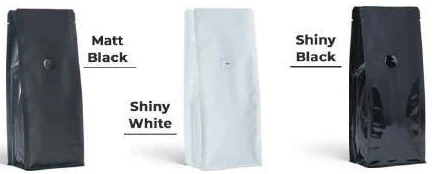
A tea, coffee or spice buyer needs a material and closure brief as well as a visual style. A coffee valve is separate from a zipper; a paper-look surface is separate from the inner structure; a sachet is separate from a larger repeat-use pack. Start with the product form and use pattern, then compare the required opening and the printed panel that remains available.
For this decision, start with the paper-look or opaque surface preference. The useful output is the appearance recorded separately from the complete material proposal. Put that output beside the relevant quotation, drawing or sample rather than leaving it in a separate email. This is an illustrative decision exercise, not a report of a completed customer trial.
Product references to make the discussion concrete
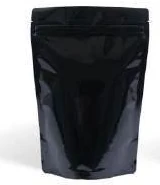
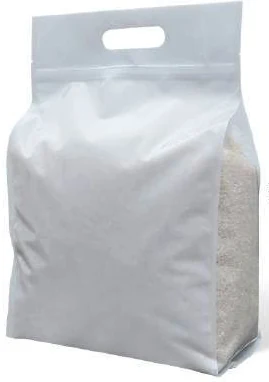
The catalogue includes coffee pouches with valve and kraft paper pouches. These examples show different physical constructions; they are not interchangeable specifications. A degassing valve and a reclosable zipper serve different purposes. Choose the pouch geometry first, then specify the valve position, zipper and final top seal as separate features. Stand-up, side-gusset and flat-bottom examples help compare panel area and shelf footprint.
| Format reference | Material or construction to clarify | Details to include in the brief |
|---|---|---|
| Coffee pouches with valve | Paper-look or opaque flexible laminate with an optional degassing valve; the complete barrier structure is specified for the coffee and storage brief. | Coffee form and intended fill; packing interval after roasting. |
| Kraft paper pouches | Kraft or paper outer with a product-specific inner construction; paper appearance does not establish a plastic-free composition. | Paper colour and surface preference; full layer structure and thickness. |
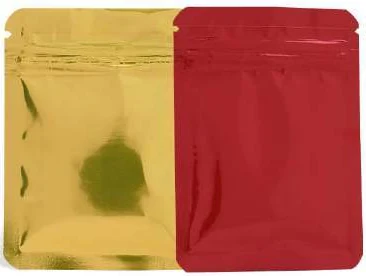
Use the reference pictures to identify the base, side panels, window or opening that you mean. A picture cannot supply the missing dimensions or material layers. If a photograph shows a finish or closure you do not want, state that difference explicitly; otherwise a visual reference can introduce an unintended requirement.
Complete the record before requesting the next sample
- Attach the appearance recorded separately from the complete material proposal. Identify the product or SKU and the date of the observation.
- Record the paper-look or opaque surface preference. Keep confirmed information separate from proposed values and questions for the supplier.
- Add the actual fill weight or volume, the dimension convention, material proposal and intended closure. Include the number of designs and quantity per design when requesting a quotation.
- State which question the next drawing, sample or quotation must resolve. A change of size, closure or material should remain visible alongside the earlier reference.
This record makes the next conversation specific. It lets the design, purchasing and packing teams work from the same proposed item and shows which decision still needs evidence. Review the related product pages for format details, or prepare a custom packaging brief with the unresolved requirements.

Release a matched blend and packaging reference
Link the actual blend, quantity, packing route, drawing and stage observations. Have the responsible teams approve composition, process and packaging evidence within their scope. If particle forms or formulation change, review whether earlier evidence remains applicable.
Send Navkar Poly Print the composition-path record and actual pack-interface question, with representative product and equipment information. Request samples that resolve the observed access or closure issue while keeping formulation and product-quality decisions under their proper technical owners.
Sources and scope.
These references support the technical discussion. Product photographs illustrate formats; the material, dimensions and suitability of the proposed pack are confirmed for each project.
- Indian Centre for Plastics in the Environment: packaging of spices
Treats whole spices and ground spices separately; historical material examples are not procurement prescriptions.
- FLtècnics: spices, coffee and tea pouch machinery
Differentiates rollstock HFFS and premade-pouch HFS routes for these product categories.
Let’s discuss your product.
Share your contents, dimensions, filling method, quantity and delivery destination. We’ll work through the proposed packaging specification with you.
Create a packaging brief