
Treat packaging lead time as a sequence of agreed dependencies, starting from defined inputs and ending at a defined delivery event. Ask what starts the clock and which approvals, materials or dispatch arrangements can change the schedule.
Define the start and finish
Record whether the supplier's proposed duration begins after order acceptance, payment, artwork approval, technical release or another stated event. Identify whether the finish means production completion, dispatch, arrival or receipt acceptance. Two durations cannot be compared meaningfully if their boundaries differ.
BOBST describes different flexible packaging operations. Procurement need not invent a plant schedule, but it should ask the supplier to identify the stages and inputs relevant to the actual quoted route.
Separate buyer and supplier dependencies
List product information, drawings, artwork, proof decisions, sample review, commercial acceptance and delivery details. Give each a responsible owner and required date. Mark whether the input is confirmed or still provisional. A design waiting for regulatory text is a visible project dependency rather than unexplained supplier delay.
Ask how revised artwork, quantity changes or a delayed component affect the proposed schedule. Record the supplier's actual response. Avoid inserting arbitrary buffers or claiming a standard rush duration that no supplier has accepted.

Connect production and transport calendars
Confirm dispatch readiness, collection responsibility, destination details and receiving availability. ICC's trade-term framework addresses selected transport costs and risks, while your calendar needs actual handover dates and contacts. Keep estimated events visibly different from committed ones.
Use events rather than an isolated duration
Create an event list before putting dates on a calendar. Identify order clarification, technical release, artwork release, agreed payment, supplier confirmation, readiness, collection and receipt as relevant to the actual proposal. Ask the supplier which events govern its quoted duration. The list is not a claim that every converter follows the same route. It is a way to make the sequence and the unresolved inputs understandable to the project team.
For every event, record planned date, current estimate, accepted commitment and actual completion separately where available. Do not replace a committed date with a new estimate and lose the history. Label the source and owner of each update. A calendar can look current while hiding the fact that nobody has accepted its latest assumptions. The record should distinguish the team's desired receipt from the supplier's actual response.
Identify dependencies that can run together
Ask which activities can proceed concurrently and which require an earlier decision. Artwork preparation might be under way while a commercial clarification remains open, but that does not imply production is authorised. Let the supplier and buyer owners confirm the actual dependencies. CIPS's procurement cycle treats specification, sourcing, contract and receipt as connected stages. Use the same discipline to keep approvals visible in the project calendar.
Avoid adding durations blindly. Some intervals overlap, some use different calendars and some start only after a complete input is accepted. Record whether the proposal uses working or calendar days and ask how holidays or receiving closures affect the specific dates. Do not invent a generic buffer to make an uncertain estimate appear reliable. If the buyer needs a contingency, planning should identify its assumption and the decision it protects.
Build a dependency table with owners
Use columns for event, preceding input, required owner, current status, date basis and effect if delayed. An artwork line should identify the approved revision, not simply say design ready. A payment line should identify the agreed milestone, not assume funds are confirmed because a request was raised. A destination line should include the receiving site's actual information. Each row should answer what completion means and who can confirm it.
Where an input is provisional, record the unresolved question. For example, mandatory text may await the product owner's review while the layout is otherwise complete. The calendar should show that distinction. Procurement can then follow up on the actual dependency rather than repeatedly asking the supplier for a shorter delivery time. Keep the supplier's current response to that dependency in the same record.
Work through a delayed artwork decision
In an illustrative project, the buyer has a desired receipt event and a preliminary supplier sequence. The artwork release moves later because a language version changes. Preserve the earlier calendar, identify the changed artwork reference and ask the supplier for a revised response. Show which downstream events it says are affected. Do not assume every event moves by the same number of days; availability and accepted sequencing need the actual parties' confirmation.
If the supplier offers a split, identify the quantities and designs included in each part. Ask whether the commercial scope, dispatch arrangement or evidence requirements change. The buyer's sales team should receive the revised accepted scope, not just the earliest date available for one subset. A partial readiness event cannot represent receipt of the whole requirement unless the project has deliberately adopted that new plan.
Include the destination's operating calendar
Collect receiving hours, appointment requirements, unloading arrangements and closure dates from the destination owner. Give the transport team the same information. A shipment can be ready on time while the planned receipt cannot occur because the site is unavailable. Record who arranges the appointment and what evidence confirms it. A dispatch estimate alone cannot settle that interface.
For multiple destinations, use separate receipt events even if goods leave in one collection. Transit and final handover may differ. Keep the carrier's proposal and the supplier's production response distinct, then connect them through the agreed collection event. If a service scope changes, request a revised transport plan rather than presenting the old arrival estimate as unaffected. This helps planning see where the current uncertainty actually sits.
Respond to changes with a decision
Maintain a change log showing the input that changed, date raised, responsible response and accepted consequence. A comment such as delayed is insufficient. Specify whether the team is awaiting information, considering an alternative or has accepted a revised event. Assign the next action and owner. This makes follow-up useful without turning the calendar into a list of unqualified promises.
Where the required receipt can no longer be supported, ask the business owner to choose among actual available options. These might include a supplier-proposed split, another approved material source or a revised operational plan. Each option needs its own scope and technical implications. Do not promise a rush route, reduce required evidence or alter the specification simply to preserve a date on the presentation.
Close the calendar against actual events
After receipt, record actual readiness, dispatch and receipt events using the agreed definitions. Review the reasons for differences without assigning every delay to one party. This gives future planning a specific history of inputs and responses. It does not establish a standard lead time for the next job, whose design, quantity and dependencies may differ. Use the history to ask better questions and obtain a fresh project-specific commitment.
Illustrative dependency review
Imagine the desired receipt date is fixed but the final artwork is still open. Build a backward review with the supplier using its current stated durations and transport proposal. Mark the latest required artwork decision as a dependency, not as a guaranteed production slot. If artwork slips, ask for a revised schedule showing the changed effect. Preserve the earlier and revised versions with reasons. This gives sales and purchasing a usable forecast without presenting an unconfirmed supplier date as a promise or allowing every project change to disappear into a single lead-time number.
A working record for this decision
Use this original worksheet with your product and supplier team. Give each row a named owner and evidence reference; a blank answer remains an open decision.
| Record | What to enter and why |
|---|---|
| Schedule boundaries | State the accepted start event and whether the finish means readiness, dispatch, arrival or receipt. |
| Input register | List technical, artwork, commercial and delivery inputs with owner and current status. |
| Supplier stages | Request project-specific stages and durations without inventing a production route. |
| Transport events | Record collection, handover, transit proposal and receiving availability. |
| Revision record | Show changes, their reasons and the latest schedule accepted by the responsible parties. |
Lead-time discussion: a practical specification example
A quotation becomes comparable only when each supplier is answering the same brief. Send the format, dimensions, proposed construction, closure, artwork count, quantity per design and destination together. If one element is undecided, identify it as an open question. Keep samples, setup charges and repeat quantities separate so the lowest-looking unit price does not conceal a different scope.
For this decision, start with the approval dependencies and required date. The useful output is a schedule distinguishing artwork approval from dispatch. Put that output beside the relevant quotation, drawing or sample rather than leaving it in a separate email. This is an illustrative decision exercise, not a report of a completed customer trial.
Product references to make the discussion concrete
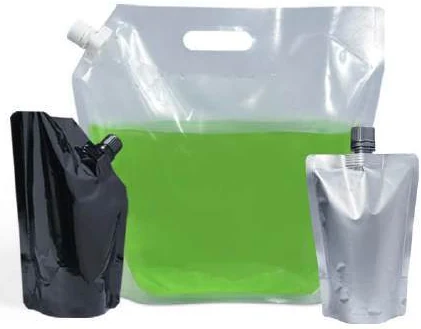
The catalogue includes flat-bottom pouches and spout pouches. These examples show different physical constructions; they are not interchangeable specifications. A box-style base gives the filled pack a distinct footprint, with separate front, back and side panels. Compare a plain top opening with a regular zipper, and use filled samples to decide the shelf depth and panel proportions.
| Format reference | Material or construction to clarify | Details to include in the brief |
|---|---|---|
| Flat-bottom pouches | Flexible laminate with paper-look or opaque outer options; the appearance alone does not identify the full layer structure. | Base width and full opened depth; net fill and product bulk. |
| Spout pouches | Flexible liquid-pack laminate with a fitted spout and cap; contact-layer and closure compatibility are reviewed for the formulation. | Fill volume and product viscosity; spout bore, position and cap. |
Use the reference pictures to identify the base, side panels, window or opening that you mean. A picture cannot supply the missing dimensions or material layers. If a photograph shows a finish or closure you do not want, state that difference explicitly; otherwise a visual reference can introduce an unintended requirement.
Complete the record before requesting the next sample
- Attach a schedule distinguishing artwork approval from dispatch. Identify the product or SKU and the date of the observation.
- Record the approval dependencies and required date. Keep confirmed information separate from proposed values and questions for the supplier.
- Add the actual fill weight or volume, the dimension convention, material proposal and intended closure. Include the number of designs and quantity per design when requesting a quotation.
- State which question the next drawing, sample or quotation must resolve. A change of size, closure or material should remain visible alongside the earlier reference.
This record makes the next conversation specific. It lets the design, purchasing and packing teams work from the same proposed item and shows which decision still needs evidence. Review the related product pages for format details, or prepare a custom packaging brief with the unresolved requirements.
Put the decision into practice
1. Agree clock boundaries. Clarify what the quoted lead time includes before using it in a customer plan.
2. Map the dependencies. Collect buyer and supplier inputs with named owners and required decisions.
3. Review the calendar jointly. Ask the supplier and logistics teams to confirm the current sequence and open assumptions.
4. Update after changes. Issue a revised schedule when artwork, quantity, components or delivery conditions change.
Share your required receipt event and current approval status with Navkar Poly Print to obtain a project-specific schedule discussion.
Sources and scope.
These references support the technical discussion. Product photographs illustrate formats; the material, dimensions and suitability of the proposed pack are confirmed for each project.
- BOBST: flexible packaging processing
Equipment manufacturer identifies distinct printing and converting processes; no Navkar machinery or commercial limits implied.
- ICC Digital Library: Incoterms questions and answers
Standards owner explains allocation of selected transport costs and risks. Exact agreed contract still controls other commercial terms.
- CIPS: Procurement Supply Cycle
Professional institute sets specification and business requirements before RFQ and considers evaluation, contract and receipt stages. Original packaging worksheets are editorial procedures, not CIPS prescribed forms.
Let’s discuss your product.
Share your contents, dimensions, filling method, quantity and delivery destination. We’ll work through the proposed packaging specification with you.
Create a packaging brief