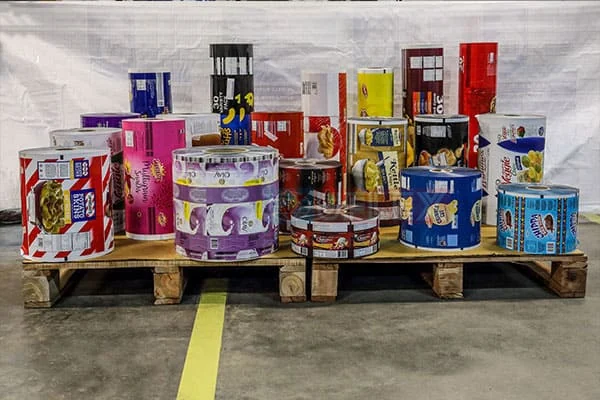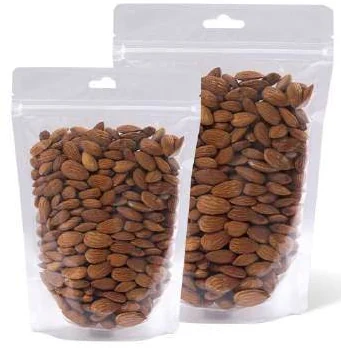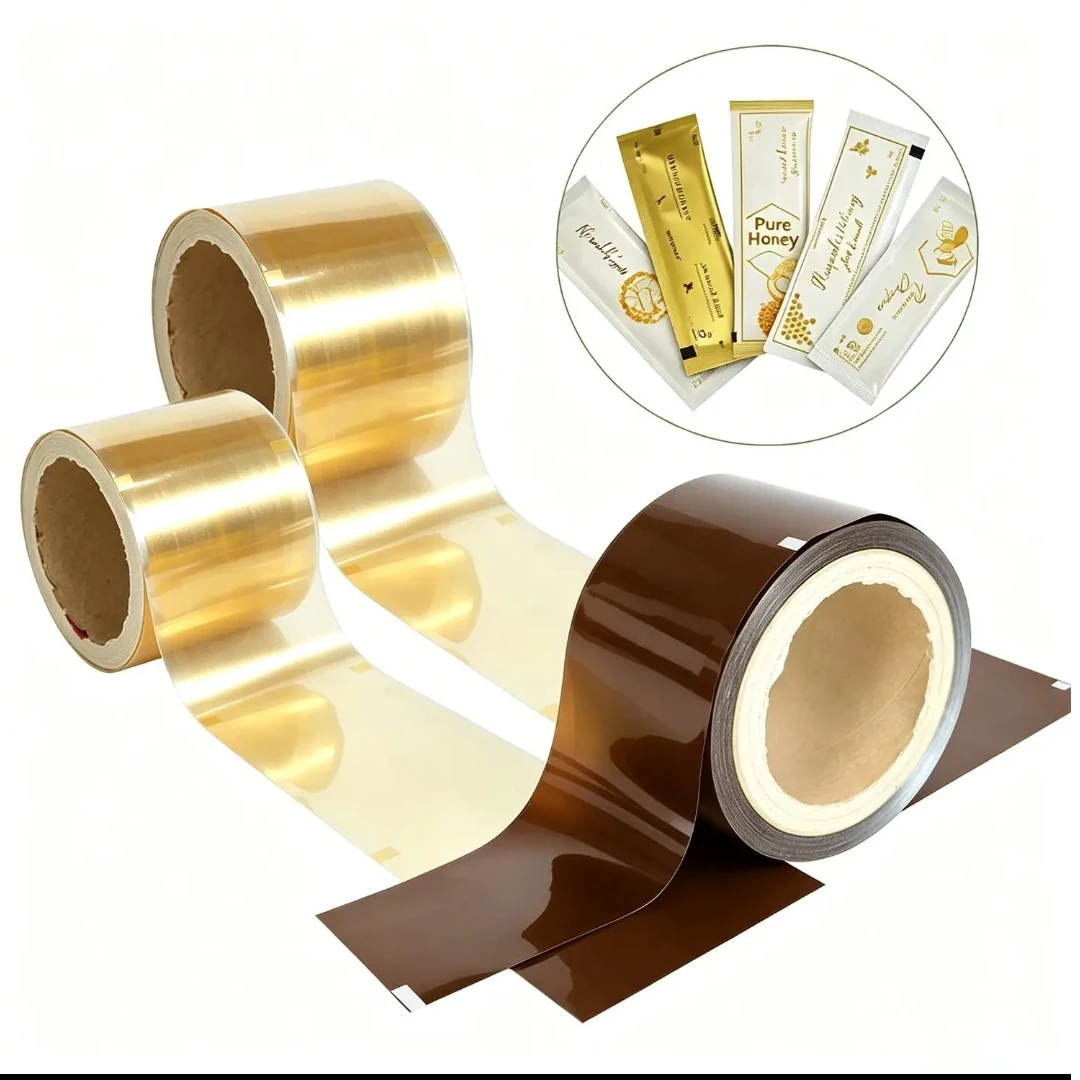
Compare gravure and flexographic proposals for the artwork programme you actually intend to buy. Both names describe printing technologies, but neither provides a universal quality or cost verdict. Ask suppliers to demonstrate the proposed design on the stated substrate and finish, explain setup scope and define the approval reference. Treat claims about suitability as project-specific until the quotation and evidence support them.
Make the design requirements explicit
The basic image carriers differ. Gravure transfers ink from recessed cells on a cylinder, as described by the Global Rotogravure Association. Flexography uses a relief printing surface; the Flexographic Technical Association explains plate relief as the height difference between the printing surface and plate floor. For a buyer, the practical consequence is that artwork preparation and the relevant production assets must be specified for the proposed route. This principle explains why setup and revision scope deserve questions; it does not establish a universal quantity threshold or rank the final print quality.
Identify critical brand colours, fine text, images, gradients and areas where registration matters. Supply the intended package layout, not an isolated logo. Ask each proposed route to state constraints or recommended changes before artwork is released. Avoid assuming that a press category alone guarantees a particular result. Tooling, prepress, inks, substrate, process control and finishing all form part of the proposed print system. A fair comparison gives both respondents the same file revision and asks how they would meet the actual visible requirements.
Compare setup and changes commercially
Request the separate scope for initial setup, production, repeat runs and artwork changes. Ask what happens if one flavour changes while the other designs remain. Record the ownership, storage and reuse terms for relevant production assets where offered. Do not invent a break-even quantity or assume that annual demand is one continuous run. Compare the quoted batch pattern and SKU mix. A nominally low unit price can be accompanied by different setup or revision scope, making the two offers difficult to compare until those differences are written down.
Define proof and production evidence
Ask what each proof or sample represents and what it can demonstrate. A digital content proof cannot be assumed to reproduce final substrate, ink and finish appearance. An unrelated sample can show a supplier’s example work but is not approval of your design. Agree how colour and critical detail will be reviewed, who accepts the result and which changes need another signoff. Keep the accepted reference linked to the actual artwork and construction. This supports a repeat-order comparison without claiming that either technology always produces a superior pack.
Use a print-programme comparison sheet
The sheet turns a broad technology comparison into a specific procurement decision. Attach the same artwork programme and proposed batch assumptions to both enquiries.
| Record | What to capture and how to use it |
|---|---|
| Artwork challenge | List the critical visual features and their locations on the final pack. Ask each supplier to identify constraints and proposed adaptations against the same file so differences are reviewed before they become production surprises. |
| Substrate and finish | Record the proposed viewing surface, material and finish for each offer. Compare appearance evidence only within its actual scope, because a sample printed on another surface may not represent the intended packaging. |
| Setup and reuse | Request the included setup assets, ownership or reuse arrangements and repeat-order assumptions. Keep these terms explicit rather than treating the technology name as a guarantee of low initial cost or inexpensive future changes. |
| SKU change pattern | Describe quantities and expected artwork revisions by design. Use the realistic batch pattern in the comparison and ask how a change to one SKU affects quoted scope, scheduling dependencies and approval work. |
| Approval evidence | Record proof type, representative sample and accepted colour or detail references. Identify the approval owner and any gap between demonstration material and the final production specification before making a commercial award. |
If proposals use different constructions or finishes, compare those differences first. Otherwise an apparent technology advantage may simply reflect a change in the package being offered.
Illustrative changing-label programme
A brand has four designs, with one likely to change frequently as the product information evolves. Instead of selecting a process from total annual volume, the buyer requests setup and revision terms for the four-design programme. It also asks each respondent to flag the same critical text and brand-colour areas. The decision can then consider actual commercial scope and evidence. The example supplies no process ranking or assumed threshold; those require the real proposals and accepted print references.
BOBST documents a CI flexo press. Glenroy illustrates downstream finishing requirements.
Relate the image carrier to the artwork challenge
The difference in image carriers matters because the artwork must be prepared for the chosen reproduction route. The gravure cylinder's recessed cells and the flexographic plate's relief image are distinct physical systems. Their names alone do not predict the quality of every fine line, photograph or large solid. Ask the actual printer to assess the difficult elements in the proposed artwork on the proposed substrate.
Identify these elements before comparing prices. Mark small reversed text, gradients, detailed images, large colour areas and any elements shared across variants. Request a relevant proof or production reference and ask what it represents. A strong sample printed on another material remains a useful example, but it does not establish the result for the current construction without the printer's assessment.
Make the SKU programme visible
List the proposed designs, what remains common and what changes between them. A family may share a background while changing language, product image or statutory text. Another programme may replace every design frequently. These patterns influence the practical discussion about image carriers, preparation and reuse. Do not reduce the programme to annual quantity while ignoring how many different designs create that total.
Ask the respondent to identify which quoted costs occur per design, per change and per order. State what happens if only a small text block changes. The answer must come from the actual supplier's route and commercial scope. There is no universal quantity at which gravure becomes cheaper than flexography, because the comparison also depends on design, tooling, reuse and the work included.
Compare equivalent evidence and quotation scope
Use the same artwork challenge, substrate description, finish and supply form for both proposals. If one respondent quotes a different construction or finishing route, record the difference before calculating a price comparison. A print-process comparison becomes unreliable when a material or supply-scope change is hidden inside it.
For an illustrative programme of four designs, ask for four separate design preparation amounts and the relevant running costs, with any common work clearly identified. Do not assume that four similar designs cost the same to prepare as one. Keep actual quotations separate from illustrative calculations and list exclusions. The buyer can then see which cost changes when a fifth variant or a text revision is introduced.
Ask what the proof can establish
A digital proof can help approve content and placement without reproducing every press effect. A physical reference can show an appearance achieved under its own conditions. The current project's acceptance plan should identify the decisions each evidence item supports, including any specific colour or fine-detail requirement. Avoid judging both routes using whichever sample happens to look most attractive under an uncontrolled viewing condition.
When comparing references, record the substrate, finish and observation condition. Ask whether the difficult feature exists at a comparable size and colour arrangement. If the reference does not contain the feature, it cannot settle that question. The next useful step may be technical artwork review rather than ordering a broader set of unrelated examples.
Choose a programme with understandable change consequences
Write the decision as a project-specific reason: the proposed route addresses the identified artwork, supplier arrangement and expected change pattern with acceptable evidence and commercial scope. Retain the assumptions about variants and repeat orders. If those assumptions change, reopen the affected part of the comparison.
Keep ownership of image carriers and approved files explicit in the commercial discussion. Ask how they are identified, stored or made available for repeat work under the actual agreement. A previous successful run is valuable only when the relevant current references can be found. This turns a generic technology debate into a reviewable purchasing decision while avoiding an unsupported claim that either process is always sharper, cheaper or better.
Gravure print brief: a practical specification example
A printed pouch is approved visually and then changes during conversion. Treat the artwork, film construction and finished geometry as separate records with shared revision references. Printed colour alone cannot show whether a seal width or usable cavity has changed. Compare a finished sample with the drawing and identify which observations concern print and which concern pack construction.
For this decision, start with the colours, artwork repeat and revision status. The useful output is the approved artwork reference for every design. Put that output beside the relevant quotation, drawing or sample rather than leaving it in a separate email. This is an illustrative decision exercise, not a report of a completed customer trial.
Product references to make the discussion concrete
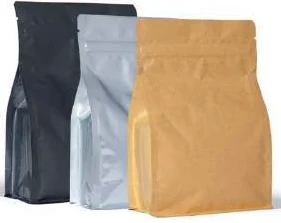
The catalogue includes flat-bottom pouches and foil-look stand-up pouches. These examples show different physical constructions; they are not interchangeable specifications. A box-style base gives the filled pack a distinct footprint, with separate front, back and side panels. Compare a plain top opening with a regular zipper, and use filled samples to decide the shelf depth and panel proportions.
| Format reference | Material or construction to clarify | Details to include in the brief |
|---|---|---|
| Flat-bottom pouches | Flexible laminate with paper-look or opaque outer options; the appearance alone does not identify the full layer structure. | Base width and full opened depth; net fill and product bulk. |
| Foil-look stand-up pouches | Opaque or metallic flexible laminate; foil and metallised constructions must be distinguished in the written specification. | Foil versus metallised requirement; outer finish and print coverage. |
Use the reference pictures to identify the base, side panels, window or opening that you mean. A picture cannot supply the missing dimensions or material layers. If a photograph shows a finish or closure you do not want, state that difference explicitly; otherwise a visual reference can introduce an unintended requirement.
Complete the record before requesting the next sample
- Attach the approved artwork reference for every design. Identify the product or SKU and the date of the observation.
- Record the colours, artwork repeat and revision status. Keep confirmed information separate from proposed values and questions for the supplier.
- Add the actual fill weight or volume, the dimension convention, material proposal and intended closure. Include the number of designs and quantity per design when requesting a quotation.
- State which question the next drawing, sample or quotation must resolve. A change of size, closure or material should remain visible alongside the earlier reference.
This record makes the next conversation specific. It lets the design, purchasing and packing teams work from the same proposed item and shows which decision still needs evidence. Review the related product pages for format details, or prepare a custom packaging brief with the unresolved requirements.
Choose a demonstrated proposal
Select the offer that meets the defined artwork and supply requirements with clear commercial terms and acceptable evidence. Record any design adaptation in the approved file, not only in the quotation. Request confirmation of the actual proposed printing route without inferring unverified machinery or capacity. Keep the comparison sheet for repeat orders so a later design change can be assessed against the same agreed programme.
Send the completed print-programme comparison sheet with your product and filling details to Navkar Poly Print for a project-specific discussion. Ask for the proposed specification, evidence required and open questions to be recorded before quotation approval.
Sources and scope.
These references support the technical discussion. Product photographs illustrate formats; the material, dimensions and suitability of the proposed pack are confirmed for each project.
- BOBST EXPERT CI flexo press
Current equipment-manufacturer process reference. Narrow contextual citation only; no Navkar machinery or performance inference.
- Glenroy custom finishing and slitting
Primary converter explanation of roll finishing; no claimed Navkar process details.
- Global Rotogravure Association: about gravure
Gravure image carrier uses recessed cells on a printing cylinder; no quality or economic threshold inferred.
- FTA: six essential factors for plate making
Relief printing surface and plate-floor distinction used to explain the principle; operating details not reproduced.
Let’s discuss your product.
Share your contents, dimensions, filling method, quantity and delivery destination. We’ll work through the proposed packaging specification with you.
Create a packaging brief